
Private Walter Board
8th battalion, Devonshire Regiment 10458
Date of Birth: 1884
Place of Birth: St. Thomas, Exeter, Devon
Date of Death: 17th of December 1921
Buried: Teignmouth Old Cemetery, plot LL169
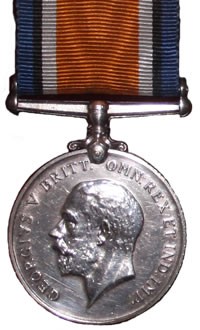
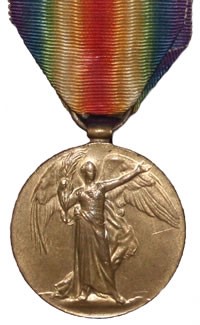
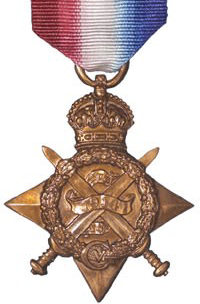
Awarded the British War Medal, the 1914-15 Star, and the Victory Medal
Walter Board was the son of Joseph and Elizabeth Board born in 1884 at St Thomas, Exeter, Devon.
| Joseph Board 1874 | Louisa Board 1878 |
| Frederick Board 1881 | Walter Board 1884 |
By 1901, the Board family were living at 5, Bitton Estate, West Teignmouth, Devon. Joseph, Frederick and Walter were all Coal Dealers.
Walter married Ellen Tanner on the 2oth of September 1910 at East Worlington, North Devon. Walter Board and Ellen Tanner marriage on the 20th September 1910
The 1911 census shows Walter and Ellen living at 8, Coombe Vale Avenue, Teignmouth, Devon. They have a boarder, Bill Cox, who is in the Coal Trade as is Walter.
Walter had joined the Army at the start of WW1 and was fighting in France and Flanders.
Walter was admitted to hospital on the 27th of September 1915 with a Gun Shot Wound to his left shoulder. Walter Board Gun Shot Wound to his left shoulder 1915
The Battle of Loos - 25/09/1915
The location was at the Hulluch Quarries. The largest British offensive on the Western Front to date and part of another Franco-British attempt to destroy the stalemate of trench warfare and break through the German lines.
The battle witnessed the first British use of poison gas and the first engagement of large numbers of troops from Kitchener's New Army. Joffre, the French Commander in Chief, wanted to take Vimy Ridge; British forces would attack the industrial area around Loos and Lens with six full divisions being sent into battle.
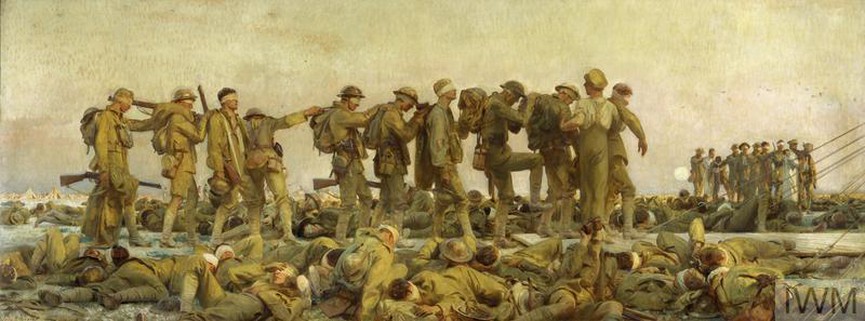 Gassed by John Singer Sargent was commissioned to contribute the central painting for the Hall of Remembrance © IWM (Art.IWM ART 1460)
The battle would be conducted on similar plans to that used, and which had failed so disastrously, at Aubers Ridge. A preliminary bombardment followed by the release of chlorine gas, there was still a shortage of artillery shells for the regiments of the Royal Artillery, to subdue German resistance would result in a swift battle with an advance deep into the German lines.
75,000 British infantrymen advanced under cover of a smokescreen to capture Loos and Hill 70 before moving up to Lens but their success was short-lived. Short of ammunition and fresh troops the advance stalled and Hill 70 was retaken by the Germans. Further north, the defences of the Hohenzollern Redoubt slowed British progress, although the front line trenches were penetrated by some units.
A network of trenches, deep shelters and machine-gun posts, over 8,000 British soldiers were killed in just one day. On the 26th of September, the arrival of German reinforcements coincided with another British assault, but without an artillery barrage.
Again the German machine gunners cut down the advancing khaki infantrymen, either in No Man's Land or on the German barbed wire. Gradually British troops began to withdraw from the positions gained the previous day.
Fighting continued around the Redoubt for several days, mainly by British infantrymen who had been cut off from the main body of troops. Eventually, realising that the assault had failed, gave the order to retreat on the 28th of September and the British returned to the starting point of 25th September.
A German counter-attack was attempted on the 8th of October but frustrated by fog and their inaccurate artillery fire which failed to cut the British and French wire their attack was repulsed. A shortage of artillery shells and too much reliance on the effectiveness of gas weakened the British attack, especially when the wind changed direction and poisoned a large proportion of the attackers.
The 7th Division on the right of I Corps, were in positions either side of the Vermelles to Hulluch road, attacking the Hulluch Quarries. The 20th Infantry Brigade, 2nd Gordon Highlanders and 8th Devonshire Regiment the lead battalions and the 22nd Infantry Brigade, 1st South Staffordshire Regiment and 2nd Royal Warwickshire Regiment attacking on the 25th of September, the gas and smoke cloud was so thick on their sector that many men removed their gas helmets to see where they were going, and became victims of the gas themselves.
The lead battalions suffering heavy casualties during their advance, the support battalions came up to assist and by 09.30 am, the 22nd Brigade had captured the Quarries and Gun Trench, with patrols reaching as far as Cite St Elie. The 21st Infantry Brigade moving up from reserve, they moved through the positions of the 20th and the 22nd Brigades in an attempt at a further advance but were halted by uncut wire in front of Hulluch, where they consolidated.
A German counter-attack on the 2nd Bedfordshire Regiment and 2nd Royal Scots Fusiliers during the night of the 29th and 30th of September retook part of Gun Trench. The Division had moved to positions south-east of Cuinchy by the time of the German counter-attack of the 8th of October, holding the line of their trenches.
The 7th Division suffered 5224 casualties in their time at Loos.
The 8th and 9th Battalions of the Devonshire Regiment
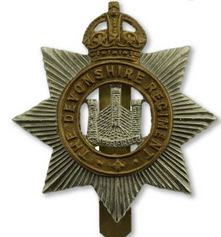 Devonshire Regiment
cap badge
The 8th and 9th Battalions of the Devonshire Regiment were formed in 1914 from war-time volunteers.
After very little training they landed at Le Havre in France on the 28th July, 1915 and moved to the Front in August 1915.
Le Havre is a port in France which during the First World War was used as a base for storage and as a transport hub . 1.9 million British soldiers passed through Le Havre en route to the Western Front which was further North.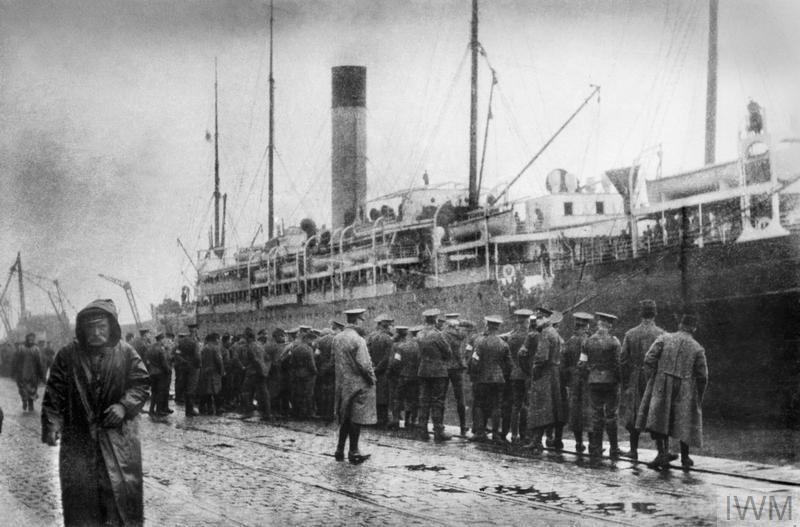 British soldiers arrive in Le Havre, France. © IWM (Q 51472)
The men had only a very brief experience of trench warfare when on the 25th September 1915, the British Army launched a massed attack against the German defences, this was later to be known as the Battle of Loos.
At the Battle of Loos both sides used poison gas as a weapon.
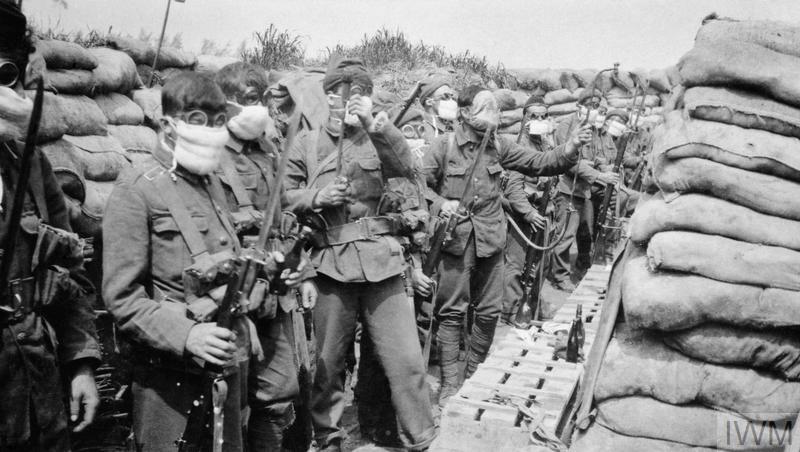 Men preparing for a gas attack © IWM (Q 51650)
This was the first time that the British used poison gas.
After they released the gas the wind changed and a green blanket of gas, dust and smoke as high as a two-storey house covered some of the British troops, it was very difficult to see anything, some men had terrible difficulty breathing and others died later because of the damaging effects of the gas.
'The gas hung in a thick pall over everything, and it was impossible to see more than ten yards. In vain I looked for my landmarks in the German line, to guide me to the right spot, but I could not see through the gas.'
Account by George Wilfred Smith, 2nd The Leicestershire Regiment, to his fiancée.
Before the men left the safety of their trenches and went 'over the top' to capture the enemy positions the Gunners would often fire a huge artillery barrage to shatter the enemy's barbed wire and other defences and kill defending troops.
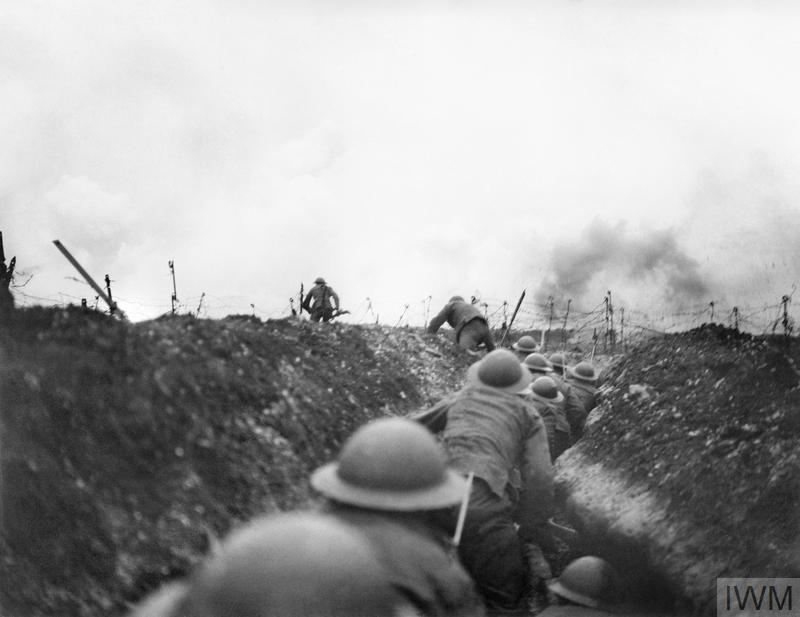 Soldiers leaving a sap trench © IWM (Q 5100)
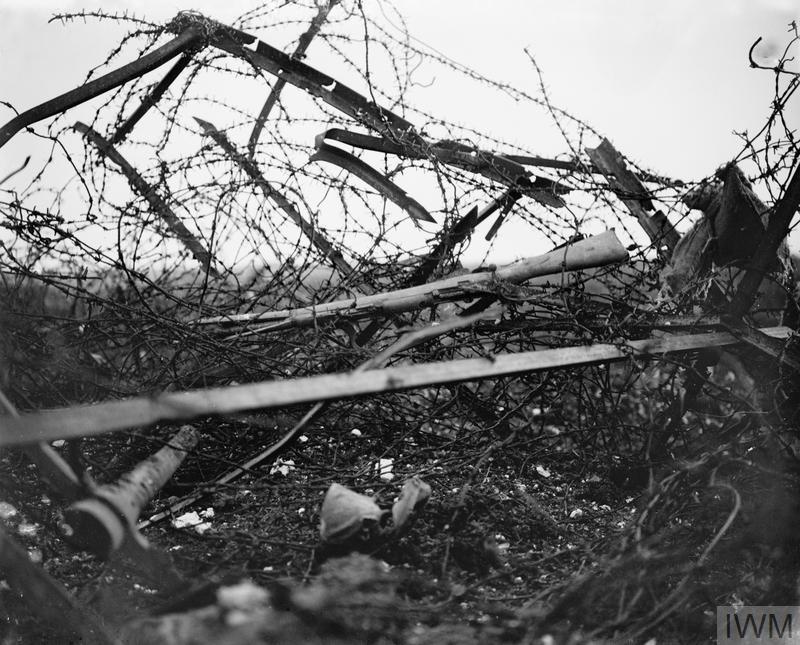 German barbed wire entanglement © IWM (Q 4593)
In this battle the artillery barrage had not cleared all the barbed wire, so the Devons had to cut their way through whilst the Germans fired machine-guns at them.
The 8th and 9th Devons were battalions with 1000 men in each unit. In a single day they had more than 1000 casualities and 500 men died or went missing.
In the First World War six million men went missing and were never found, their bodies were lost in the mud. Sometimes bodies would be found as new trenches were dug.
The land had been heavily wooded before the war began.
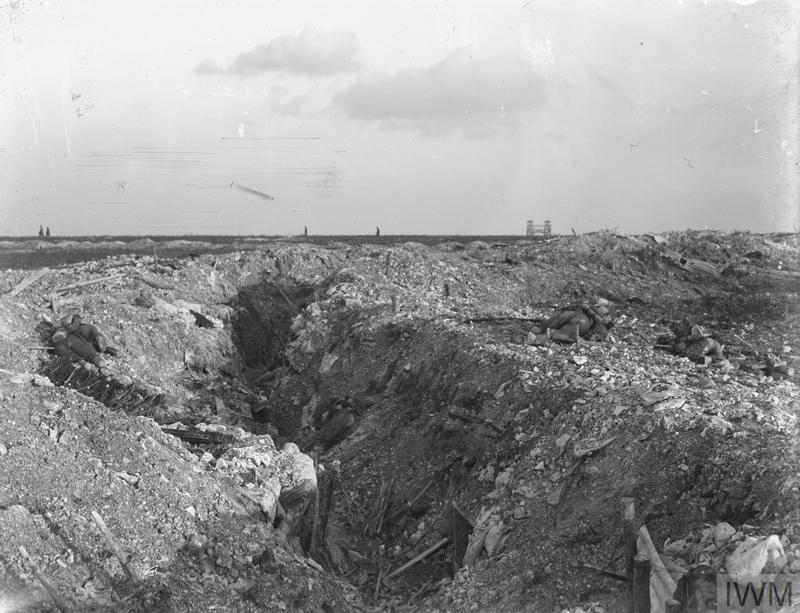 British dead in front of a captured German trench; near Loos, 30th September, 1915 © IWM (Q 28980)
Casualties at the Battle of Loos on the 25th September 1915 were the worst in a single day for the British army, with some 8,500 dead.
The Battle of Loos lasted from 25th September to 15th October, 1915.
Walter Board died on the 17th of December 1921 aged just 37. There is no further information as to whether his WW1 injuries and the use of gas had contributed to his death at such a young age.
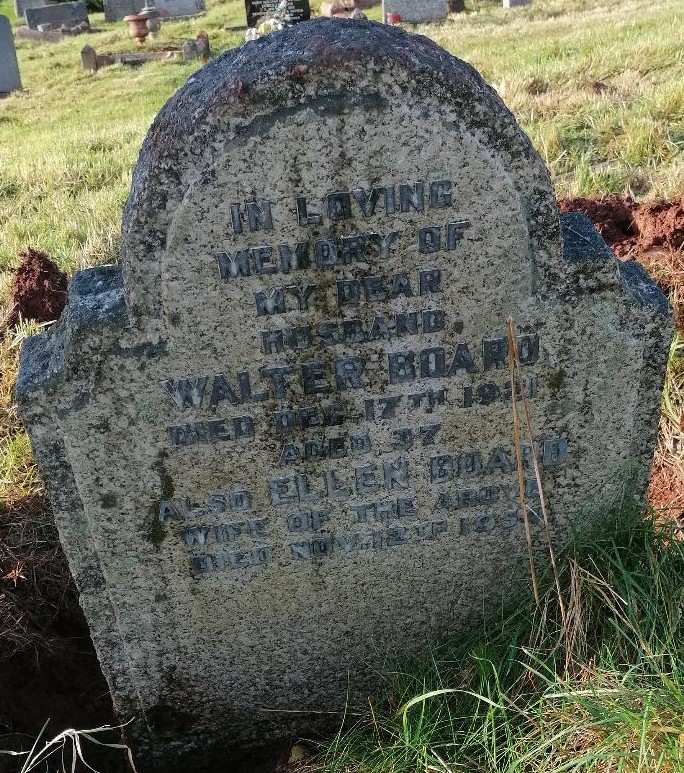 Walter and Ellen Board Headstone in Teignmouth Old Cemetery, plot LL169
