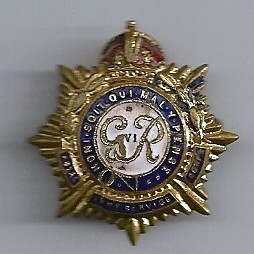
Corporal Frank Hannaford
Royal Army Service Corps, S4/043913
Date of Birth: 28th of August 1889
Place of Birth: Teignmouth, Devon
Date of Death: 3rd quarter 1981
Buried: Teignmouth Old Cemetery, plot DD216
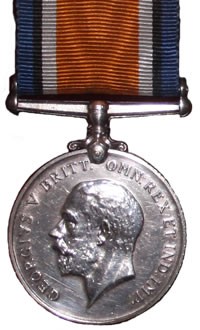
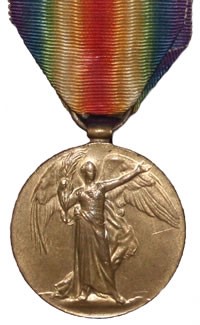
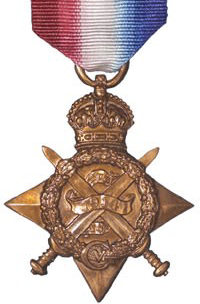
Awarded the British War Medal, the 1914-15 Star, the Victory Medal and Mentioned in Despatches
Frank Hannaford was born on the 28th of August 1889 at Teignmouth, Devon and baptised on the 13th of October 1889 at Widecombe-on-the-moor, Devon. Frank's parents were George Hannaford, a Gentleman's servant, and Mary Hannaford.
Frank married Jennie Eliza Adams in the 2nd quarter of 1914 at Honiton, Devon.
Royal Army Service Corps WW1
Frank joined the Royal Army Service Corps in 1915 and was in France, the Western Front, or France and Flanders.
Frank's war record was one of the 'burnt documents'. The Burnt Documents are the remained of the 6.5 million WW1 soldiers' papers which were destroyed by fire in September 1940. Thanks to an incendiary bomb at the War Office Record Store in Arnside Street, London, about two-thirds of the original 6.5 million soldiers' records were ruined, with the remainder largely charred or water-damaged.
Frank was mentioned in despatches during 1919,
Rank: Corporal
Rank (2nd): A./Sjt.
Service Number: S4/043913
Gazette No. 31728. Mentioned in Despatches. The names of the undermentioned Officers, Ladies, Warrant Officers, Non-commissioned Officers and Men are to be added to those brought to notice for distinguished and gallant services and devotion to duty by Lieutenant-General W.R. Marshall, K.C.B., K.C.S.I., Commanding-in-Chief, Mesopotamian Expeditionary Force, in his Despatch of the 7th of February 1919.
Gazette Date: 09/01/1920
Gazette Page: 516
Duty Location: Mesopotamia.
Service: British Army
Regiment: Royal Army Service Corps.
Mesopotamia 1918
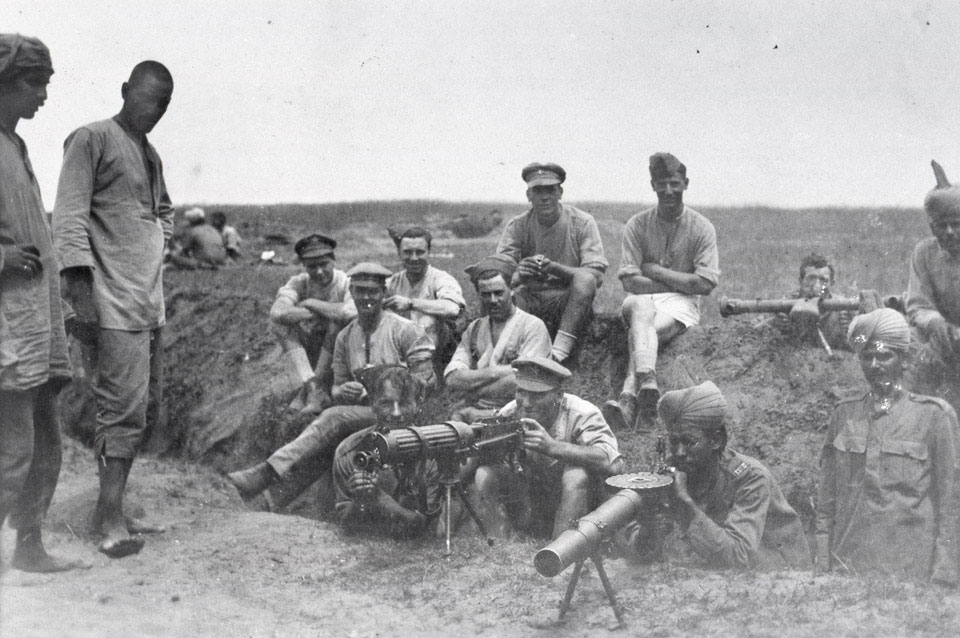 By the end of 1918, the British had deployed 112,000 combat troops in the Mesopotamia theatre. The vast majority of the 'British' forces in this campaign were recruited from India. From an album compiled by Lieutenant Kindom relating to 7th Meerut Division. - https://collection.nam.ac.uk/detail.php?acc=1983-03-41-2-23, Public Domain
The British resumed their offensive in late February 1918 capturing Hīt and Khan al Baghdadi in March, and Kifri in April. In March 1918, Britain faced an uprising by a rebel organization called Jam'iya al-Nahda al-Islamiya in Najaf and laid siege to the city until May, when the rebels surrendered.
For the rest of 1918, the British had to move troops to the Sinai and Palestine Campaign in support of the Battle of Megiddo. General Marshall moved some of the forces east in support of General Lionel Dunsterville's operations in Persia during the summer of 1918. His very powerful army was astonishingly inactive, not only in the hot season but through most of the cold. The fight in Mesopotamia was not wanted anymore.
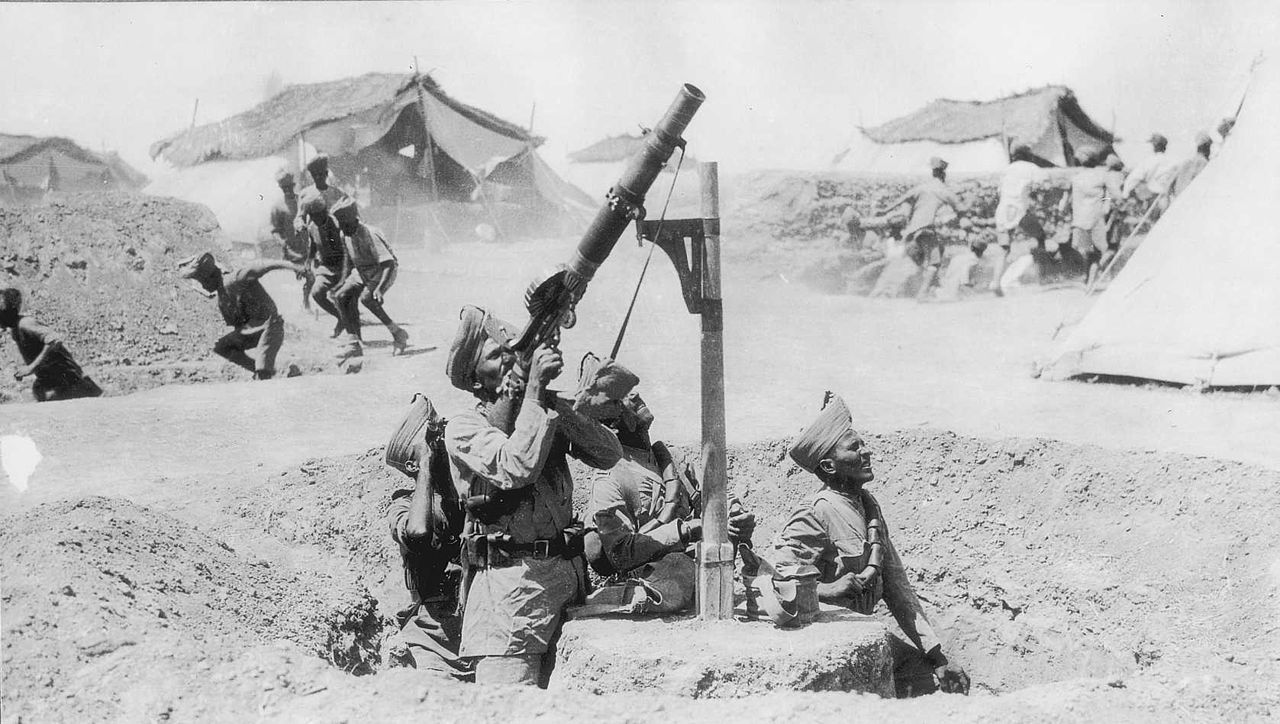 Indian anti-aircraft machine gunners in action. By War Office photographer - http://www.bankingonbaghdad.com/download/jpgs/Meso%20Campaign.jpg, Public Domain
Negotiation of armistice conditions between the Allies and the Ottoman Empire began with the turn of October. General Marshall, following instructions from the War Office that every effort was to be made to score as heavily as possible on the Tigris before the whistle blew, went on the offensive for the last time.
General Alexander Cobbe commanded a British force from Baghdad on the 23rd of October 1918. Within two days it covered 120 kilometres, reaching the Little Zab River, where it met and engaged Ismail Hakki Bey's Sixth Army, most of which was captured in the resulting Battle of Sharqat.
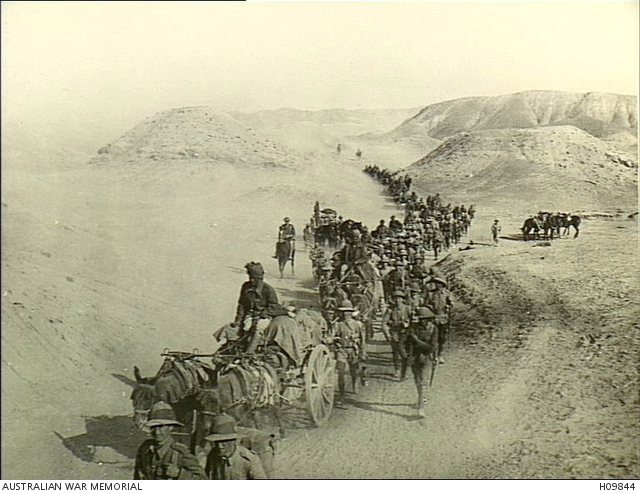 1918 - British and Indian Army troops moving across the desert near the Sakartutan-Baghaz Road over the Jebel Hamarin pass. By Unknown author - https://www.awm.gov.au/collection/C317303, Public Domain
On the 30th of October 1918, the Armistice of Mudros was signed and both parties accepted their current positions. General Marshall accepted the surrender of Khalil Pasha and the Ottoman 6th Army on the same day, but Cobbe did not hold his current position as the armistice required and continued to advance on Mosul in the face of Turkish protests. British troops marched unopposed into the city on the 14th of November 1918. The ownership of Mosul Province and its rich oil fields became an international issue.
The war in Mesopotamia was over on the 14th of November 1918. It was 15 days after the Armistice and one day after the occupation of Constantinople.
In the 1939 register, Frank and Jennie were living at 7, Lower Brook Street, Teignmouth, Devon, with daughter Dulcie.
Frank died in the 3rd quarter of 1981 and is buried with his wife and two daughters in plot DD216, Teignmouth Old Cemetery.
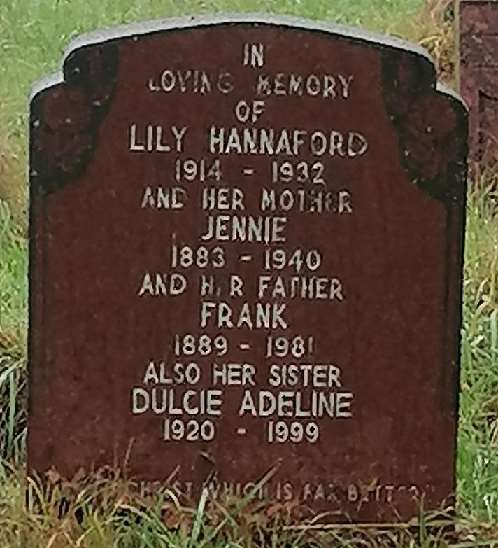
Inscription: In loving memory of Lily Hannaford 1914-1932 and her Mother Jennie 1883-1940 and her Father Frank 1889-1981 also her sister Dulcie Adeline 1920-1999.
