Officer's Cook 1st Class Frank Paul Menghini
Royal Navy Officer's cook 1st class, 357140
Date of Birth: 25th of September 1876
Place of Birth: St. Brides, London
Date of Death: 6th of January 1937
Buried: Teignmouth Old Cemetery, plot AA94
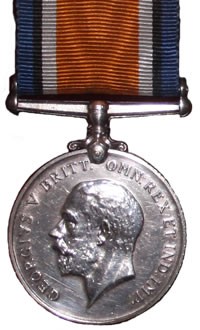
Awarded the 1914-15 Star, Victory Medal, and the British War Medal.
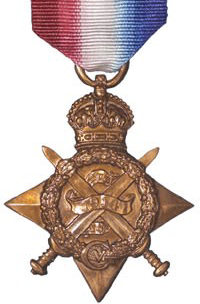
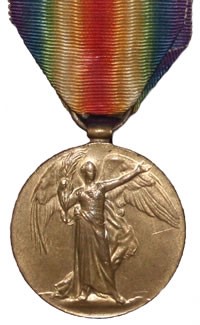
Frank Paul, born Paul Francis, was born on the 25th of September 1876 at St. Brides, London.
In 1881, Frank and his family are living at 75, Farrington Street, London. His father, Paul, was a confectioner and his mother's name is Agnestine. Frank had one sister, Helena aged 3.
Frank joined the Royal Navy and in 1901 was aboard HMS Sappho.
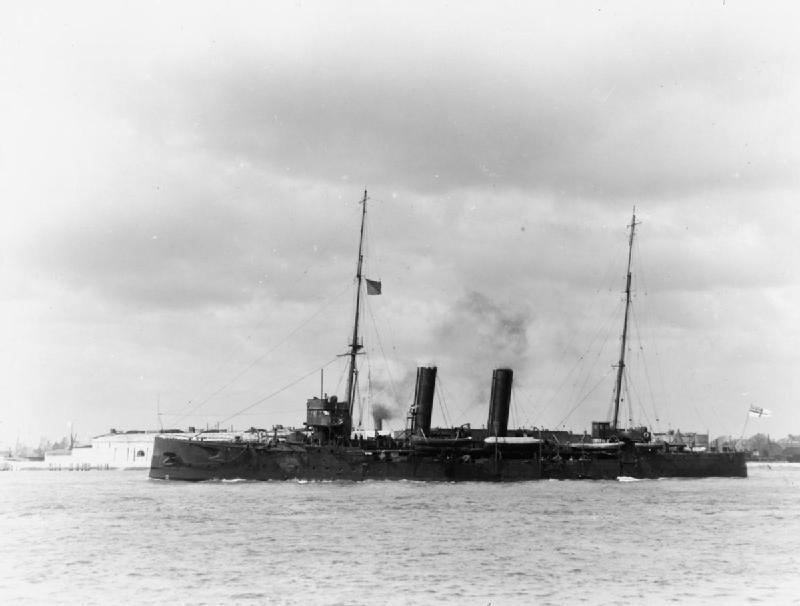 HMS Sappho - © IWM (Q 21730)
HMS Sappho was an Apollo-class cruiser of the British Royal Navy which served from 1892 to 1918 in various colonial posts. From 1900 she served as a troopship during the Second Boer War, but in June 1901 she went aground while crossing the Durban Bar and had to leave for repairs in the United Kingdom. She was escorted from Las Palmas by HMS Furious and arrived at Sheerness on the 21st of August 1901, proceeding to Chatham for repairs the following day.
In 1911, Frank is staying in Southampton, Hampshire.
Frank was aboard HMS Abercrombie from May 1915 until December 1915.
 HMS Abercrombie - By Bean, Charles Edwin Woodrow (C E W) - Public Domain
HMS Abercrombie sailed for the Dardanelles on the 24th of June 1915 and provided fire support during the Battle of Gallipoli.
Frank is aboard HMS Agincourt from January 1916 until April 1917.
 HMS Agincourt - By not stated - This is photograph SP 564 from the collections of the Imperial War Museums (collection no. 1900-01), Public Domain
HMS Agincourt was a dreadnought battleship built in the United Kingdom in the early 1910s. Originally part of Brazil's role in a South American naval arms race, she holds the distinction of mounting more heavy guns (fourteen) and more turrets (seven) than any other dreadnought battleship, in keeping with the Brazilians' requirement for an especially impressive design.
Brazil ordered the ship in 1911 as Rio de Janeiro from the British company Armstrong Whitworth. However, the collapse of Brazil's rubber boom and warming in relations with Argentina, the country's chief rival, led to the ship's sale while under construction to the Ottoman Empire.
The Ottomans renamed her Sultan Osman I, after the empire's founder, and the ship was nearly complete when the First World War broke out.
The British government seized her for use by the Royal Navy, together with another Ottoman dreadnought being constructed in Britain.
This act caused resentment in the Ottoman Empire, as the payments for both ships were complete, and contributed to the decision of the Ottoman government to join the Central Powers.
 The Central Powers consisting of Germany, Austria-Hungary, the Turkish Ottoman Empire and Bulgaria - By Publ. Photochemie Berlin No. 3603 Public Domain
Renamed HMS Agincourt by the Royal Navy, she joined the Grand Fleet in the North Sea. During the war, the ship spent the bulk of her time on patrols and exercises, although she did participate in the Battle of Jutland in 1916.
On the 1st of January 1915, Agincourt was still assigned to the 4th Battle Squadron (BS) but had been assigned to the 1st Battle Squadron before the Battle of Jutland on the 31st of May 1916. She was the last ship of the Sixth Division of the 1st BS, along with Hercules, Revenge and the flagship, Marlborough, the most heterogeneous group possible as each ship was from a different class.
The Sixth Division was the starboard most column of the Grand Fleet as it headed south to rendezvous with the ships of Admiral Beatty's Battle Cruiser Fleet, then engaged with their opposite numbers from the German High Seas Fleet in the North Sea. Admiral Jellicoe, commander of the Grand Fleet, kept it in cruising formation until 18:15 when he ordered it to deploy from column into a single line based on the port division, each ship turning 90° in succession.
This turn made the Sixth Division the closest ships in the Grand Fleet to the battleships of the High Seas Fleet, and they fired on each ship as they made their turn to port. This concentration of fire later became known as "Windy Corner" to the British, as the ships were drenched by German shell splashes although none were hit.
At 18:24, Agincourt opened fire on a German battlecruiser with her main guns. Shortly afterward her six-inch guns followed suit as German destroyers made torpedo attacks on the British battleships to cover the turn to the south of the High Seas Fleet.
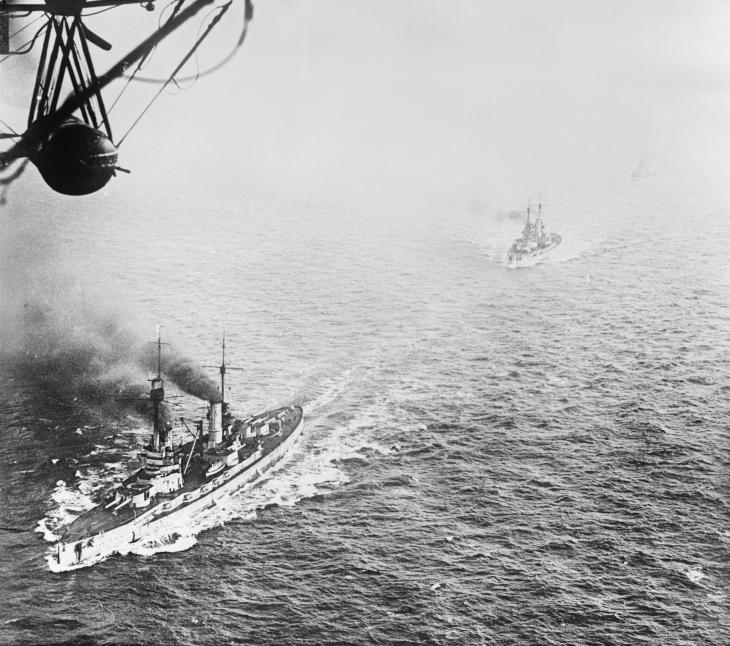 German Battle Cruiser © IWM (Q 20615A)
Agincourt successfully evaded two torpedoes, although another struck Marlborough. Visibility cleared around 19:15, and she engaged a Kaiser-class battleship without result before it was lost in the smoke and haze. Around 20:00, Marlborough was forced to reduce speed because of the strain on her bulkheads from her torpedo damage and her division mates adapted to her speed.
In the reduced visibility, the division lost sight of the Grand Fleet during the night, passing the badly damaged battlecruiser SMS Seydlitz without opening fire. Dawn found them with only the Detritus from the previous day's battle insight and the division arrived back at Scapa Flow on 2 June.
Agincourt fired 144 twelve-inch shells and 111 six-inch shells during the battle, although she is not known to have hit anything.
In 1920, Frank was living at Coldrey Cottage, Landscore Road, Teignmouth.
By 1931, Frank had married Carmelina Virginia, maiden name and marriage date not found, and they were living at Vine Cottage, Mere Lane, Teignmouth.
Frank died on the 6th of January 1937.
 Pray for the souls of Frank Paul Menghini died January 6th 1937 aged 60, and his wife Carmelina Virginia Menghini died December 21st 1990
The Battle of Jutland
This was the largest naval battle of the First World War (May 31 - June 1, 1916).
It involved involved 250 Warships and around 100,000 men.
The German and British navies were 10 miles apart and pounded each other with shells for a whole day.
The German High Seas Fleet had hoped to ambush and destroy the British Grand Fleet in the North Sea.
The British were warned by their codebreakers and put two forces to sea early, they lost 14 ships and over 6,000 men in the battle but the fleet was still ready to fight the next day.
Amongst those losses were six men from Teignmouth. Two brothers, Edward and Frederick Meyers, were both stokers aboard HMS Indefatigable; it was Frederick's 23rd birthday. Frank Morrish had just returned from leave, he was chief armourer on HMS Defence. Arthur Kidston and William Mutters were both serving in the Royal Marine Light Infantry; Arthur was on board HMS Black Prince and William on HMS Queen Mary. Seaman Stephen Sienesi died of wounds on board HMS Petard and was buried in Edinburgh.

The Battle ended in a stalemate, both sides claimed victory.
The German navy did not seriously challenge British control of the North Sea during the First World War again after that battle, as a result the British were able to blockade essential supplies from reaching Germany which contributed to Germany losing the war.
Warships of the Grand Fleet in the North Sea. © IWM (Q 68706)
