Squadron Leader Francis Charles Beresford Savile
3rd Special Reserve Battalion, Duke of Cornwall’s Light Infantry and Squadron Leader RFC/RAF
Date of Birth: 16th of August 1894
Place of Birth: Teignmouth, Devon
Date of Death: 26th of November 1970
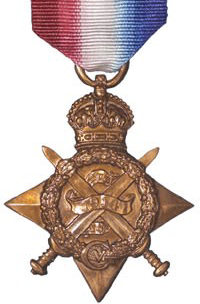
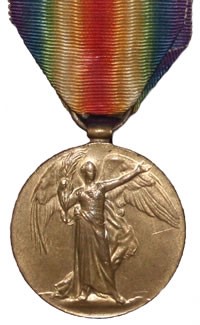
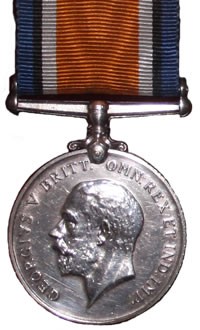
Awarded the 1914 Star, the British War Medal, the Victory Medal, the Defence Medal, and the War Medal 1939-1945
Francis Charles Beresford Savile was born on 16th August 1894 in Teignmouth, Devon, the son of Paymaster in Chief Bourchier Beresford Savile, Royal Navy, and Mary Louisa Savile.
Francis had been educated at Kelly College in Tavistock where he was a member of the Officer Training Corps through to his leaving the school on 25th November 1912, he went to live in Exmouth and was then commissioned as a 2nd Lieutenant into the Special Reserve in January 1913, before being promoted to Lieutenant with the 3rd Special Reserve Battalion, Duke of Cornwall’s Light Infantry on the 8th of April 1914.
With the outbreak of World War 1, he was attached to the 1st Battalion, and saw service out on the Western Front from the15th of August 1914, and was slightly wounded in action at Le Cateau on the 26th of August 1914, and was evacuated to England from Rouen the next day, he had suffered a bullet wound to the right thigh.
 British soldiers marching through a town during the Retreat from Mons, 1914. © IWM (Q 109652)
The wounded Savile was evacuated from the battalion in the face of the advancing Germans.
Arriving at Southampton on the 28th of August, Savile was briefly treated at the Royal Herbert Hospital in Woolwich, where the bullet was extracted, before being sent on leave to recuperate from the 7th of September until the 6th of October 1914. On returning from leave Savile was posted to the 3rd Reserve Battalion at Falmouth from the 8th of October 1914, having been deemed fit for light-duty on home service.
Savile was not declared fit for overseas service until February 1915. Having then returned to the Western Front for service with the 2nd Battalion, Savile was slightly wounded in action for a second time, this time with a gunshot wound to the right foot when in action at St Julian near Ypres on the 23rd of April 1915, and having been once again evacuated home, was then deemed unfit for overseas service until the 15th of February 1916, having in the meantime rejoined the 3rd Reserve Battalion at Falmouth and later Sandown on the Isle of Wight.
Savile was then transferred to the Royal Flying Corps in August 1916 and was employed on instructional duties at home. On the 27th of January 1918, two aircraft were en route to Oranmore from Belfast when they were compelled to land. Major Ernest Grahame Joy managed to land on Athlone racecourse but Captain Francis Charles Beresford Savile crash-landed at Ferbane. Savile’s aircraft was taken by road to the Curragh for repairs.
 The Royal Flying Corps 1914-1918 © IWM (Q 12021)
He transferred into the Royal Air Force on its formation on the 1st of April 1918, went out to the Western Front with 207 Squadron around July 1918.
Being appointed to a permanent commission with the rank of Captain in the Royal Air Force with effect from the 1st of August 1919, at which point he resigned his commission in the army, he was appointed to 238 Squadron at Plymouth for duty in seaplanes on the 11th of February 1920, and then posted to the School of Technical Training at Ramsgate for a course of instruction on the 20th of June 1921.
Posted to 100 Squadron at Grantham on the 26th of July 1922, he was then posted back to the School of Technical Training at Ramsgate on the 16th of October 1922, before being posted out to join 70 Squadron at RAF Hinaidi, Iraq.
 Royal Flying Corps or Royal Air Force Sopwith 1 1/2 Strutter in 1917-1918 period - Public Domain
Royal Air Force Station Hinaidi was a Royal Air Force station near Baghdad in Iraq. It was operational from 1922 until 1938 when operations were transferred to RAF Habbaniya.
Posted home to the Headquarters of the Wessex Bombing Area at Andover on the 11th of October 1927, he was then posted as a Station Adjutant to Upper Heyford on the 25th of October 1927, before joining 7 Squadron at Winchester on the 10th of November 1930.
Posted to the Calshot base for a course of instruction on the 5th of January 1931, he was posted to 204 Squadron at Plymouth for duty in flying boats from 7th July 1931 and was then posted to RAF Calshot on 15th November 1933, before being posted to Netheravon to join No.6 Flying Training School on the 1st of April 1935.
Posted back out to Iraq to join 203 squadron at Basra for flying boat duties on the 30th of January 1936, he was posted to No 1 RAF Depot at Uxbridge in readiness for his discharge on the 4th of December 1937 but then received a posting to the RAF Station at Cardington on the 10th of March 1938.

Savile remained with the Royal Air Force right through the inter-war years, and during the Second World War spent three years on ground duties with flying boats at Calshot, being appointed second-in-command of 204 Squadron circa 1945. Savile was confirmed in the rank of Squadron Leader on the 1st of October 1945.
 Francis Charles Beresford Savile Probate 1971
