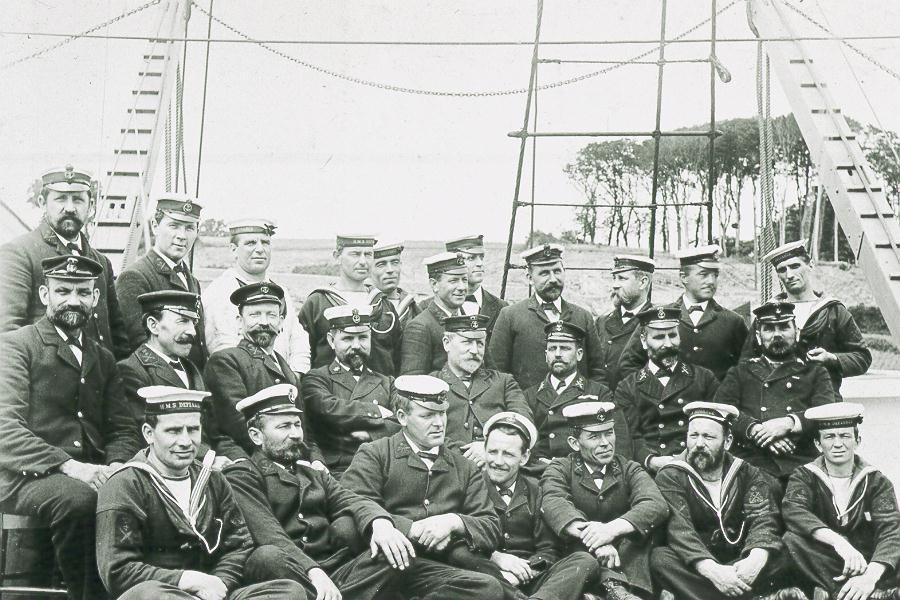
Crew of HMS Defiance. Photo Cyberheritage
Able Seaman William James Cotton
HMS Vivid, Royal Naval Fleet Reserve, 121860
Date of Birth: 16 February, 1867
Place of Birth: Teignmouth, Devon
Date of Death: January 27, 1919
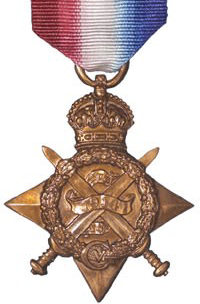
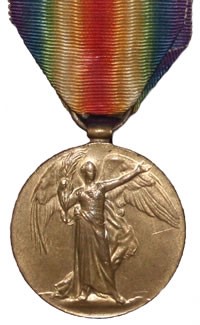
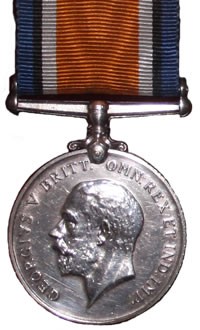
Awarded the 1914 Star, the British War Medal and the Victory Medal
William James Cotton was born on the 16 February 1867 in Teignmouth, Devon.
His mother was Fanny Cotton née Godfrey, she was born in *Knighton, Devon c. 1841. Before Fanny married William's father she worked as a house servant in a hotel in Station Road, Wolborough, Devon.
Some records show Fanny' place of birth as Ashburton.
William's father was Thomas Henry William Cotton (1847-1911), the 1911 census shows him as a Carriage Proprietor.
In 1885, William entered the navy for a fixed period of ten years.
On 8 January 1892, his son William Henry Thomas Cotton was born,
In the first quarter of 1893 William married Maud Alicia Kerton, their marriage was registered in Newton Abbot. Maud was born c. 1865 in Stokeinteignhead, Devon.
In 1895 their son Stephen H. J. Cotton was born in Stokeinteignhead.
William's original service contract with the Royal Navy also ended in 1895. At this point Navy records shows him as 5 feet 4.25 inches tall with brown hair, dark brown eys, a ruddy complexion and with a bite-mark and a tattoo on his right forearm.
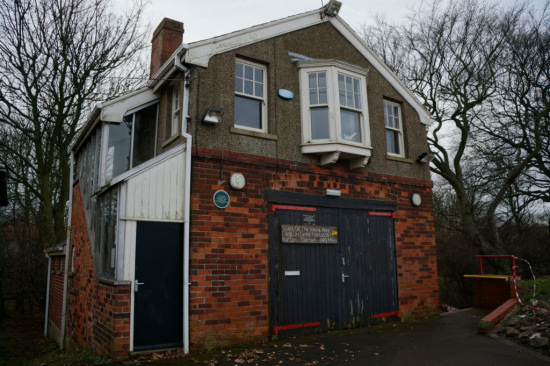 Former Coastguard Station, Barton-upon-Humber.
(CC BY-SA 2.0) © Copyright Ian S
In 1901 William, Maud and their two sons were living at the Royal Navy Coastguard Station in Barton upon Humber, Lincolnshire.
William's rank was Boatman.
The station was manned by 8 men and one officer, all were naval personnel and most were reservists and so could be called on at any time to join in naval activities.
The 1911 census shows William, Maud and their son Stephen as servants at the house of Elizabeth Raynor (Erme Cottage, Emington, Ivybridge). William is employed as a Handyman and Gardener, Maud is the Housekeeper and Stephen is a Footman.
Their son William Henry Thomas Cotton aged 17 was working as a gardener and boarding with George Paddoy and his family in Dartmouth when the 1911 census was taken. On 28 February 1912 he entered the navy for a fixed period of twelve years. He was serving on Admiral Beatty's Battle Cruiser HMS Lion when she was shelled at the Battle of Jutland. He survived the war.
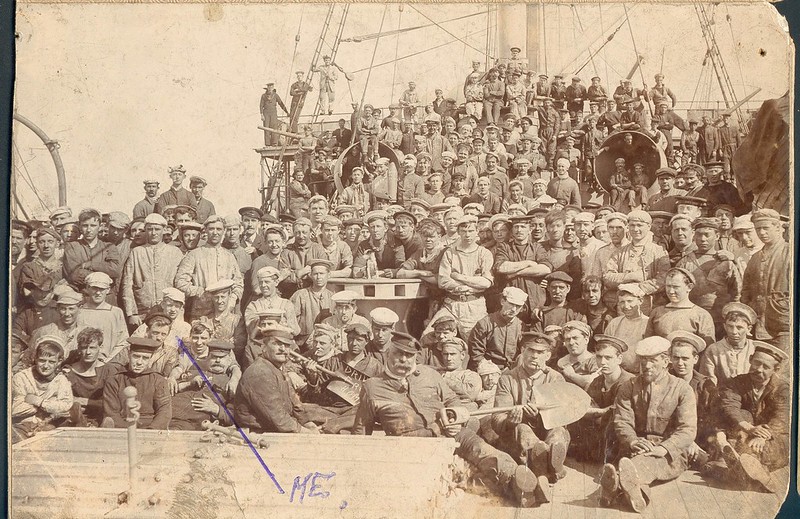 Crew of HMS Edgar circa 1915. (CC BY-SA 2.0) © Lombardo
William's Navy record is only partly legible, it appears to say that he served with HMS Edgar 29 June 1915 to 15 August 1915 and was severely wounded during operations in the Dardenelles, with bullet wounds in both legs.
He was then listed as serving with HMS Vivid I from 16 August 1915 to 26 January 1916.
William James Cotton died on 27 January 1919.
HMS Edgar was a first class cruiser of the Royal Navy, launched on 24 November 1890. She and three others from her class were modified for service in the Dardanelles by the addition of anti-torpedo bulges, minesweeping gear over the bow and extra stiffening on the hull sides.
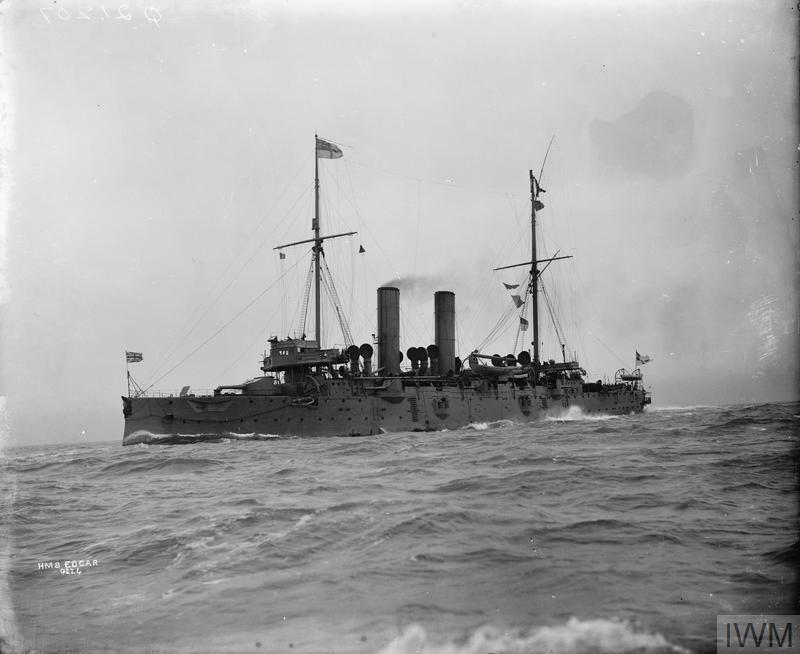 HMS Edgar 1903. © IWM (Q 21207)
HMS Vivid
During the First World War HMS Vivid was a Royal Navy base at Devonport, a district of Plymouth.
A number of ships were renamed HMS Vivid whilst serving as depot ships for the base, HMS Cuckoo (launched in 1873), was a torpedo gunboat that was HMS Vivid between 1912 and 1920.
Some men served at the base for the duration of the war, others could be recorded as serving on HMS Vivid when between ships, on leave or on route to hospital etc.
The Stonehouse Naval Hospital was a mile from the Devonport base. For casualities coming to the UK from ships in the Atlantic, Stonehouse was the first large UK Naval hospital that they would reach.
![Arriving at the Naval Hospital Stonehouse by boat. <br />Cyber Heritage [Public domain]](/images/snippets/rnh3.jpg) Arriving at the Stonehouse Naval Hospital by boat. Cyber Heritage [Public domain]
Arriving at the Stonehouse Naval Hospital by boat. Cyber Heritage [Public domain]
There were a lot of casualties. Over 5000 British ships were lost in the First World War.
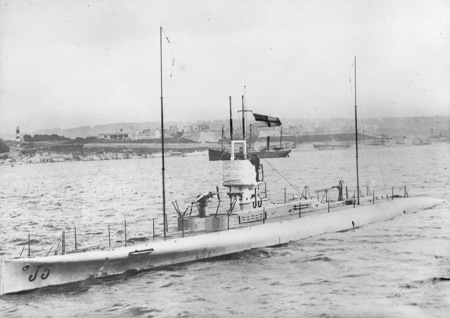 A J5 Class submarine built in the Devonport yard during WW1
(later transferred to the Australian Navy) © IWM SP3096
The Royal Navy Devonport dockyard was a part of the base. During WW1 the yard built battle cruisers, cruisers, dreadnoughts and submarines.
These all used the cutting-edge technology of the time as did the battle ship HMS Warspite and the steam-driven J5 submarine shown here.
Experts in every related field were gathered to help develop and test new designs for the best possible vessels and weapons to equip them.
The most capable people available would have trained those responsible for training others in using these newly developed technologies.
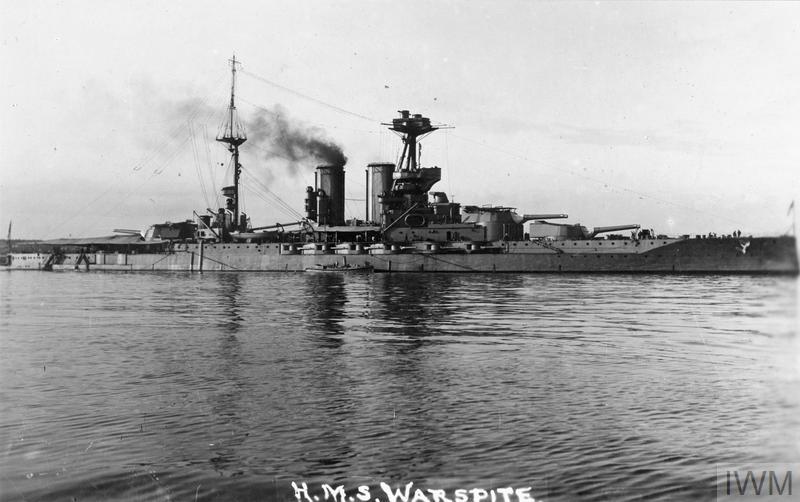 Battleship HMS Warspite. The battleship HMS Warspite (1913) was built at Devonport and was the most technically advanced ship of her era. She carried a company of more than 1,000 sailors and officers, holds more honours than any other in British naval history and served in both World Wars. At the Battle of Jutland in 1916, Warspite held off the German High Seas Fleet. © IWM (Q 75593)
Naval Trawlers
Vivid III was the part of the Devonport base relating to the Trawler Division.
At the outbreak of the First World War about 3000 civilian steam fishing trawlers were put into military service and more than 39,000 fishermen joined the Trawler Section of the Royal Naval Reserve to crew the ships they knew so well.
They cleared mines from sea routes, and attacked enemy submarines.
This was vitally important work, the Maritime Archeology Trust estimate that in 1918 alone, enemy U-boats sank 5896 British vessels.
Fishing vessels on Admiralty service played a role in something in the region of 20 per cent of all allied U-boat sinkings during 1918.
Fishermen, the Fishing Industry and the Great War at Sea: A Forgotten History.
By Robb Robinson page 161
H.M.S. Defiance
In the First World War, the Defiance was one of the Royal Navy's torpedo training schools at the Devonport Royal Navy Base.
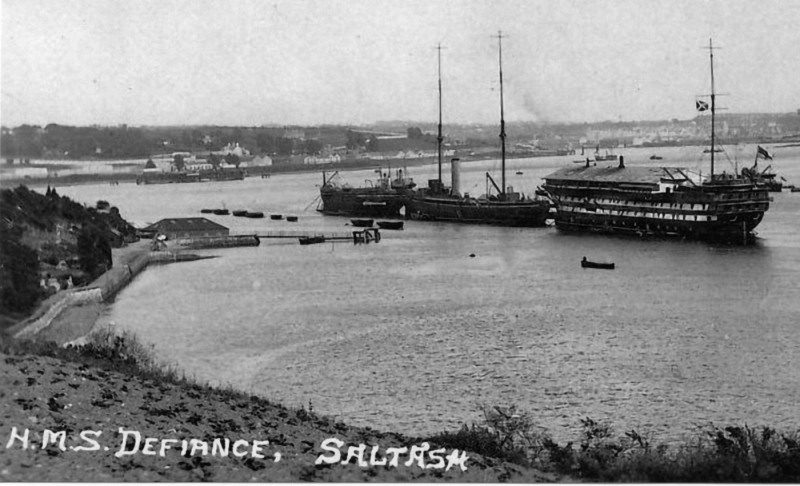 HMS Defiance. Photo - Cyberheritage