Corporal Harry Rice Clark
Royal Marine Artillery (RMA), HMS Emperor of India, RMA/9842
Died of Pulmonary tuberculosis
Date of Birth: 10 December 1883
Place of Birth: Combeinteignhead
Date of Death: 22 August 1919 aged 37
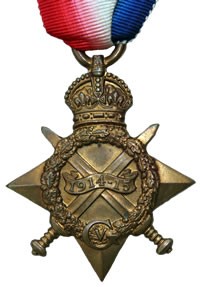
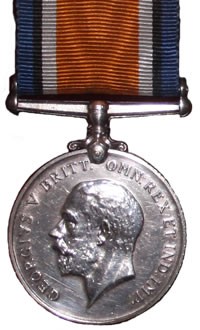
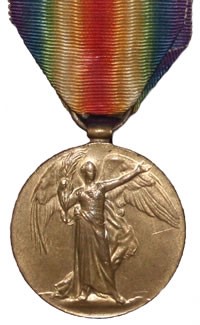
Son of John Coysh Clark and Sarah Clark; husband of Alice Jane Clark (née Pack).
1891, Harry is living in The Cottage, Coombe, Haccombe with Combe, with his parents.
| Harry and his siblings | |
|
John Clark 1868 |
Thomas Clark 1871 |
|
William Clark 1878 |
James Clark 1881 |
|
Harry Clark 1884 |
Sidney Clark 1886 |
|
Bertha Clark 1888 |
|
Harry enlists in the Royal Navy on 26th December 1901.
On the 27th of July 1915, Harry marries Alice Jane Pack in the parish church, Combeinteignhead. Harry is listed as a Gunner, RMA.
The Royal Marine Artillery, RMA, was formed as an establishment within the British Royal Marines in 1804 to man the artillery in bomb vessels. This had been done by the Royal Regiment of Artillery, but a lawsuit by a Royal Artillery officer resulted in a court decision that Army officers were not subject to Naval orders.
As their uniforms were the blue of the Royal Regiment of Artillery, this group was nicknamed the "Blue Marines" and the Infantry element, who wore the scarlet uniforms of the British infantry, became known as the "Red Marines", often given the derogatory nickname "Lobsters" by sailors.
1916, Harry is aboard HMS Inflexible during the Battle of Jutland. HMS Inflexible was an Invincible-class Battlecruiser which, along with Indomitable and Invincible and their escorting light forces, formed the Third Battle Cruiser Squadron.
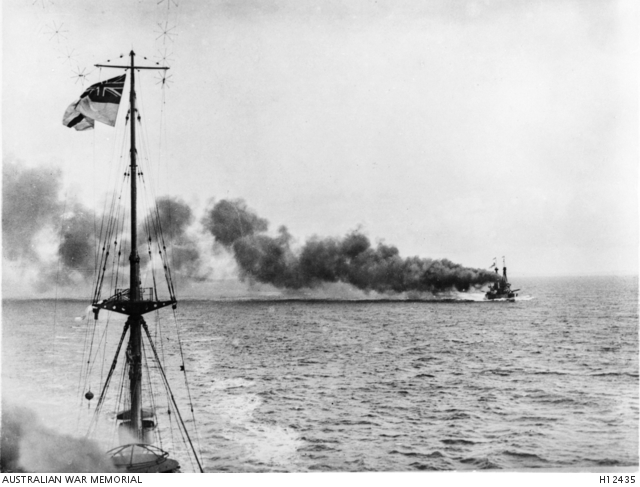 HMS Inflexible
During the engagement in which Invincible was destroyed, Inflexible saw a torpedo pass under her and was continually straddled by enemy fire. Subsequently, the two surviving battlecruisers joined VA Beatty's Battlecruiser fleet and came under further torpedo attack.
During the evening, Inflexible collided with a submerged object, presumed to be wreckage. Apart from this collision, she suffered no damage or casualties.
In 1919, HMS Emperor of India was assigned to the Mediterranean Fleet, as part of the 4th Battle Squadron, along with her three sisters and two Centurion-class battleships. During this period, she served in the Black Sea during the Allied intervention in the Russian Civil War to support the Whites against the Red Bolsheviks.
Admiral Edward Hobart Seymour, the commander of British forces in the Black Sea, hoisted his flag aboard the ship on 14 April. The ship bombarded Bolshevik troops on 5 May 1919 outside Theodosia, and later to disrupt the operations of a railway being used to supply the Bolshevik assault on the port.
The ship was also involved in observing the Greco-Turkish War of 1919–22. This included stops in the ports of Mitylene and Smyrna.
