
Miss Alice Wills
Voluntary Aid Detachment (VAD), British Red Cross
Awarded a Voluntary Aid Detachment Badge and a Certificate
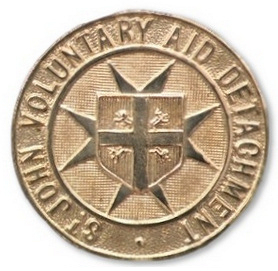 VAD badge
Miss Alice Wills of Ellerslie Shaldon.
Voluntary Aid Detachment (VAD) Records
Date of engagement with VAD: 11.1916 to 2.1919.
Services rendered: 171 days out of 225.
Duties: Needlework. Work party: 4672.
Honours awarded: Certificate and War Work Badge.
Voluntary Aid Detachment (VAD) Cards
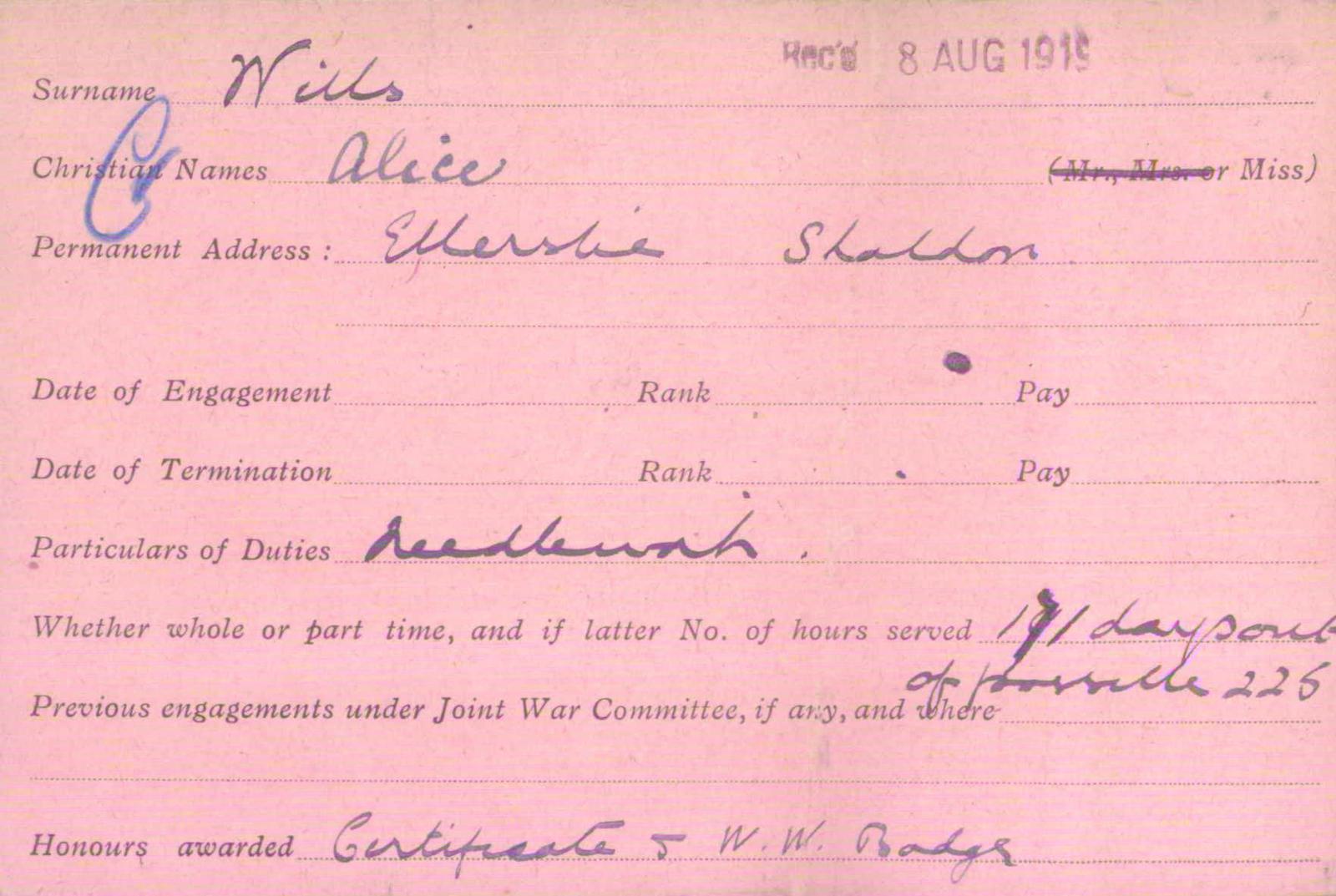 Voluntary Aid Detachment (VAD) Card. ©2018 British Red Cross (CC BY-NC 2.0 UK)
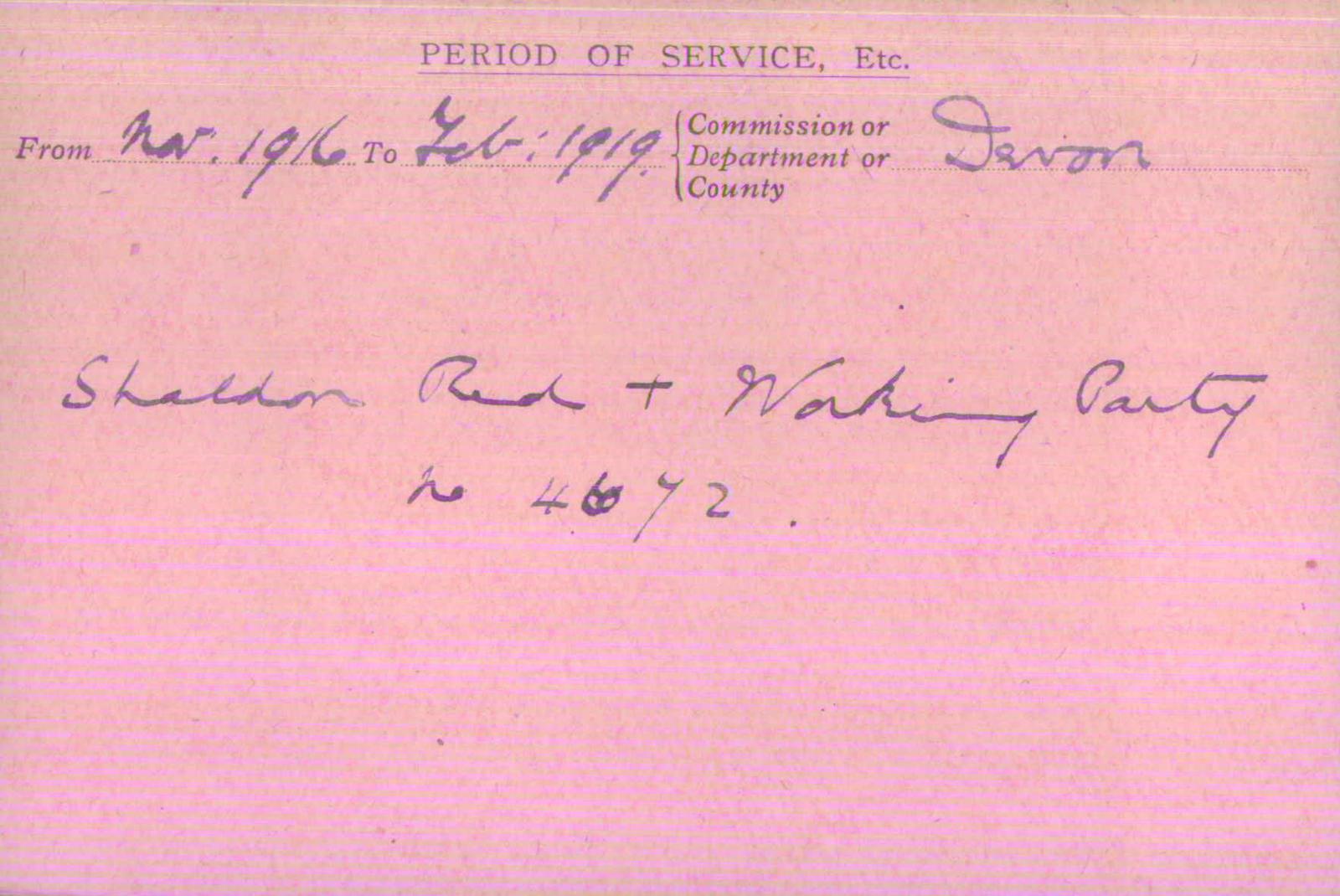 Voluntary Aid Detachment (VAD) Card. ©2018 British Red Cross (CC BY-NC 2.0 UK)
War Work Depots
Work depots were established to collate and despatch clothing. From the depots items were sent to the Red Cross headquarters or directly to soldiers in auxiliary hospitals at home or abroad.
 Head Mrs Louise Sassoon CBE, Officers Families Fund. © IWM (WWC D8-4-971)
In Teignmouth, women were called upon to play their part in the war effort. The Mayoress of Exeter called for them to form themselves into a Working Party making shirts and cholera belts for men called up to war.
Extreme Knitting
As the war developed so did a nation-wide mass knitting frenzy, soon colourful, unusual garments reached soldiers at the front.
A War Office warning was put out (to women in particular) to narrow the range of garments, and to use only khaki wools.
Patterns were made available from the British Red Cross and also printed in the local papers - including the Teignmouth Post. They included "bed jackets, helpless case shirts (shirts for amputees), sleeping suits, nurses' aprons and surgeons' overalls", to name but a few.
 Cholera Belts advertisement. (Public Domain)
Knitted Cholera Belts
Donations of items such as tobacco, shirts and tinned fruit for soldiers going to fight in World War I, often included "cholera belts"
"A cholera belt was a flat strip of flannel or knitted wool about six feet long and six inches wide which was twisted around the abdomen before wearing a shirt and purported to be a preventive measure against cholera.
It was a standard army issue and widely believed to protect the wearer from cholera, dysentery and other ills thought to be brought about by chilling of the abdomen."
https://en.wikipedia.org/wiki/Cholera_belt
The items sent from home to the front were affectionately known as "comforts".
46 women in Shaldon and Ringmore were recorded as members of Womens War Work Depot.
Shaldon was led by Mrs Ethel Hudson of 33, The Green, Shaldon. Ethel is recorded as having served for 221 days out of a possible 225 days and was awarded a certificate, a WW badge and a special badge from the Central Work Rooms.
42 women in Teignmouth were recorded as members of Womens War Work Depot number.
The Ladies Working party organised gifts of money and clothes for the Belgian refugees and collected items to put into packages for the soldiers, e.g. mittens, mufflers, cigarettes, chocolate and toiletries.
On January 5th 1917, The Teignmouth Post carried details of the output of the Teignmouth Women's War Work Depot:
"The Teignmouth Women's War Work Depot have during the past year sent away over 4536 articles to different hospitals and societies in England and abroad as follows:
Red Cross 2634
Hazebrouche 460
Refugees 406
Sandbags 393
No.16 Gen Hospital 391
Voluntary Organisations 166
Minesweepers 51
Misc 35
Parcels to Heal (old linen) 8 not included"
The Teignmouth Post, February 9th 1917, carries an article describing the women's work at the Women's War Work Depot in Brunswick Street. It also invites women to supply their details so Red Cross certificates can be applied for. However, Red Cross records suggest not all of the women received a certificate in recognition of their work.
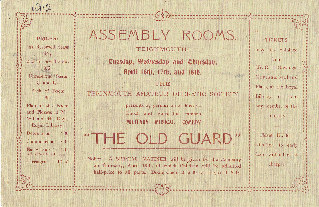
The Teignmouth Post, March 9th 1917 gives an extensive account of a concert held at the Assembly Rooms on the Den in aid of funds for the Women's War Work Depot raised £31- 9 shillings.
Many fund raising events were organised for the War Relief Fund with concerts and musical performances.
Even the children became involved as 2 letters in The Children's Corner Union (Teignmouth Post) to Uncle Ralph show us.
The first from Estelle Williams says "We are all very busy just now and I am going to knit socks for the Red Cross Society."
The second from Nora M. Golightly, " I have been very busy making clothes for the soldiers. I made 2 helmets for them and a shirt and 2 little petticoats for the soldiers' and sailors' orphans."
