Whilst the majority of battles in World War One were fought on land, the sea played a pivotal role in the Allied victory. The ability of the Allied powers to import resources and export manpower were essential elements of the war. During the war the German U-boats (submarines) brought terror to those travelling at sea, but despite their best endeavours Germany failed to secure overall command of the sea.
The height of the German sea offensive came in 1917 and the impact of the war at sea was felt in Teignmouth as a number of ships were wrecked in the waters close to Teignmouth.
View more
SS Glocliffe
 SS Glocliffe (Public Domain)The SS Glocliffe was an armed merchantman built in 1915 by Craig, Taylor & Co. Ltd in Stockton-On-Tees, and was operated by Humphries Ltd – Globe Shipping, based out of Cardiff. She displaced 2211 gross registered tonnes (G.R.T) at launch and was 287 feet long and 43 feet at the beam. She was equipped with a single triple-expansion steam engine, rated at 215hp, driving a single screw.
The Glocliffe was built as an armed wartime merchantman, and as such carried a 12-pounder gun from the outset for self-defence, manned by embarked Royal Navy gunners.
In a striking similarity to another ship lost off Teignmouth during the First World War, the Galicia, the Glocliffe was damaged by a mine laid by the submarine UC-1 (under the command of Egon Von Werner) whilst transporting coal in the vicinity of Elbow Buoy near Southampton on the 2nd of January 1916. Despite flooding she was successfully beached, refloated and repaired; this incident came less than a year into her service life.
The Glocliffe was again carrying coal on the 19th of August 1917, this being Welsh coal embarked at Barry and bound for Southampton, when she passed close by Teignmouth, coming within 9 miles of Berry Head. It was this coal trade which often passed Teignmouth during the First World War, with Teignmouth itself being a port where a large amount of coal was delivered, however, due to the effects of the conflict this sector of Teignmouth’s economy went into decline between 1914 and 1918.
As the Glocliffe passed Berry Head, she was sighted by Hans Howaldt in command of the U-Boat UB-40, who moved to attack her. The torpedo from UB-40 was only sighted after it had closed to within 150 yards of the Glocliffe, and as such there was no time for evasive action. The Torpedo struck her amidships at around 14:20, instantly killing two firemen. She was abandoned ten minutes later and had completely sunk by 16:05, with her 20 remaining crewmen, including the two naval gunners who never got the opportunity to fire a round, taking to her boats and subsequently being landed in Brixham.
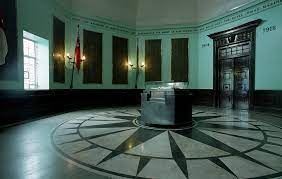 The two firemen killed by the initial torpedo impact have since been identified as Ali and Said Muhammad of the Indian Merchant Service. They are both commemorated on the Bombay 1914-1918 memorial in Mumbai, India.
 SS Galicia (Public Domain)
The SS Galicia was built in 1901 by Wigham Richardson & Sons Ltd in Newcastle-Upon-Tyne for the Pacific Steam Navigation Co. of Liverpool. She was 400 feet long, displaced 5922 gross registered tonnes (G.R.T) at launch, and was 50 feet at the beam. She had 2 triple-expansion steam engines generating a total of 411hp driving twin screws and was capable of a maximum speed of 14 knots.
Her career in the First World War before her sinking was not uneventful, with the Galicia striking a mine, laid by the U-Boat UC-1 (under the command of Egon Von Werner), 2 miles away from the South Goodwin Lightship on approach to Liverpool on the 31st of July 1915. She suffered moderate flooding in her holds but her crew managed to beach her at Deal from where she was then refloated, repaired and returned to service.
Her second encounter with a mine was not so fortuitous. And on a passage from London to Valparaiso in Chile, carrying a varied cargo including cloth, cement, mail and ammunition in addition to passengers, she struck another mine laid by U-Boat UC-17 commanded by Ralph Wenninger only 3 miles off of Teignmouth on the 12th of May 1917. She began to sink rapidly by the head and her crew and passengers abandoned her. Of her 63 passengers and crew, some took to the ship's boats whilst the rest were taken off by local fishermen, Royal Navy patrol boats, and Teignmouth’s Lifeboat the Alfred Staniforth.
Her sinking was readily visible to the population of Teignmouth at the time, with local resident Albert Best recording the following in his diary for that day: “About 8:15 this morning there was the sound of a great explosion. We heard in the house quite distinctly, it made the windows rattle. Later there was seen a Steam Ship in difficulties in the offing about E.S.E of the Pier.”
The Teign Heritage Centre holds two distinct artefacts relating to the Galicia’s sinking. This includes the original R.N.L.I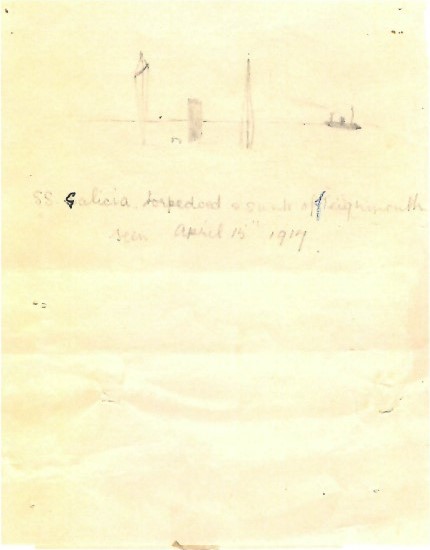 ‘Return of Service’ document which recounts the launch of the Alfred Staniforth to the Galicia’s assistance, and a pencil drawing made by a local resident showing the Galicia’s masts and funnel exposed above the waterline after she settled on the bottom. She remained in this state until her wreck was destroyed by explosives in 1923 as she had become a navigational hazard to local fishermen.
View more
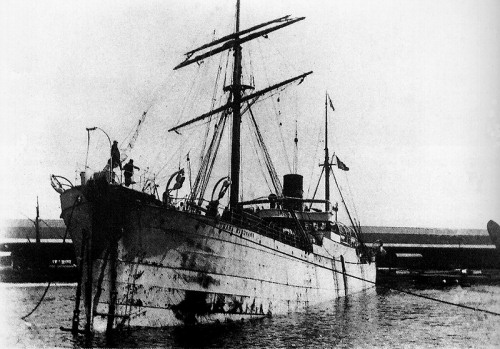 Francois Arago 1882 (Public Domain)
SS Peronne – 1st of September 1917
The SS Peronne was originally built as the cable-layer CS Westmeath by the Sunderland Shipbuilding Co. Ltd in 1882. She was 320 feet long, 42 feet at the beam and displaced 3342 gross registered tonnes (G.R.T) at launch; she had one 316hp triple-expansion steam engine driving a single screw. During her service with Hudson R. M. & Sons out of Sunderland, the Peronne (as the Westmeath) laid a submarine cable from Canada to Bermuda over 800 miles (1300km) in length in 1890.
In 1892 the CS Westmeath was sold to the French Société Industrielle des Téléphones, renamed the SS François Arago, The Peronne, during her time as the SS François Arago, seen at Le Havre in c.1906. and continued in service as a cable-layer. In 1916 she was then sold to her final owners, Cie. Francaise de Marine et de Commerce, and began service as the general cargo ship SS Peronne.
On the 1st of September 1917, the Peronne was making her way from Le Havre to Barry in South Wales when she was torpedoed by U-Boat UC-65 under the command of Max Viebeg. It was reported that UC-65’s periscope was observed only 150 yards from the ship before she torpedoed her, with the Peronne sinking in 10 minutes approximately 5 miles Southeast of Berry Head. All 36 of her crew, including her master Emile Cazeils and three Senegalese firemen, survived the attack; taking to the ship's boats and eventually being brought into Brixham harbour. At the time the Peronne was noted as being ‘in ballast’, meaning she was carrying no cargo.
 The 90mm gun recovered from the Peronne in 1993 on display at Teign Heritage. It is serial No.1 of its typeA number of artefacts from the Peronne are held in the collection at the Teign Heritage Centre, most notably a 90mm gun recovered from her wreck in 1993. The gun was originally made in France by E. Gouin & Co in 1877 and was mounted on the ship for self-defence. The gun itself weighs 1 and a half tons, making its raising a feat in itself; it was first unbolted from the Peronne, lying at a depth of around 20 metres, and then raised using an airbag. The gun then had to be manoeuvred closer to the shore across the bottom before it could be craned out of the water.
Also held are two other pieces, a crested plate and a crested dish, from the wreck which are on display.
View more
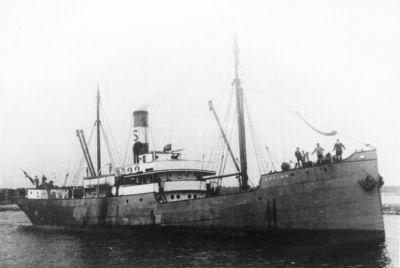 The SS Gefion (Public Domain)
SS Gefion – 25th of October 1917
The SS Gefion was originally built in Norway in 1914 by Bergens Mekaniske Verksteder A/S – BMV. As built she was 226 feet long, 37 feet at the beam and she displaced 1123 gross registered tonnes (G.R.T) at launch, coming equipped with 1 triple-expansion steam engine rated at 135hp driving a single screw. She originally entered service with Halvorsen Adolph of Bergen, serving with them off the coast of Norway for only 3 years before being acquired by the Shipping Controller and pressed into wartime service in 1917.
On the 25th of October 1917, the Gefion was passing by Teignmouth with a cargo of Welsh coal from Penarth which she was due to unload in Rouen, France, when she was spotted by Hans Howaldt in command of U-Boat UB-40 10 miles Northeast of Berry Head. He immediately moved to torpedo her, his weapon running true despite the adverse weather conditions and the Gefion’s maintained speed of 10 knots. It was spotted by the chief mate on watch at an angle of 20 degrees from the bow, and despite evasive manoeuvres, it struck home on the port side in her number 2 hold.
The Gefion began to sink rapidly, and her crew rushed to the boats, only to find the port boat had been destroyed in the initial torpedo impact. 9 men launched the starboard boat whilst the remaining 16 crew entered the water directly from the foundering ship. The 9 men in the lifeboat then conducted a search for other survivors, pulling 5 aboard their boat and discovering all except the donkeyman and the Gefion’s master James Minto, who was lost with the ship. After several hours in the water, the survivors were picked up and landed at Brixham, having never seen the U-Boat which torpedoed them.
The Teign Heritage Centre holds an R.N.L.I ‘Return of Service’ document describing the launch of Teignmouth’s lifeboat,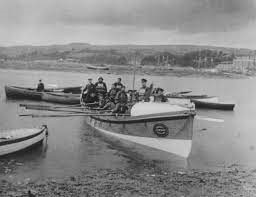 The Alfred Staniforth, Teignmouth’s fourth lifeboat since the first was established in 1851. She was withdrawn from service towards the end of 1930 at the time the Alfred Staniforth, on the 25th of October 1917 in response to “a very violent explosion” observed off Teignmouth. This turned out to be a steamer of a similar disposition to the Gefion, who appears to have been subsequently attacked by the UB-40 but whose crew were able to save their ship and bring her into Torbay harbour. An addendum to the report reads: “Since writing the aforementioned report, the coxswain has received a communication from Torquay to the effect that the explosion overheard was the sinking of a steamer by the same submarine which afterwards attacked the boat to which the lifeboat went. The crew of the wrecked ship were landed by a trawler at Brixham.”
It is believed that the sunken ship mentioned here is the Gefion, with Hans Howaldt in UB-40 apparently attacking a second as yet unknown vessel after he had torpedoed the Gefion.
SS City of Swansea – 25th of September 1917
The SS City of Swansea was originally built as the SS Gwendoline by Palmer’s Shipbuilding & Iron Co. Ltd in Newcastle-Upon-Tyne and entered service with Wilson & Co, London, in 1882. She was 260 feet long and 38 feet at the beam, displacing 1375 gross registered tonnes (G.R.T) at launch. She came equipped with a 2-cylinder steam engine, rated 148hp, driving a single screw. In 1892 she was then sold to Burdick & Cook, also of London; and continued service as the Gwendoline. In 1913 she was then sold to her final owners, Palgrave, Murphy & Co of Dublin, and renamed the SS City of Swansea. During this time it is unknown whether she was registered as an Irish ship or continued on the English registry between Palgrave, Murphy & Co purchasing her in 1913 and putting her into service in 1914.
On the 25th of September 1917, she could be found passing by Teignmouth carrying a cargo of coal from the Tyne to Bocau in Southwest France. It was here where she was spotted by U-Boat UB-40 under the command of Hans Howaldt, who torpedoed her 15 miles East-Northeast of Berry Head. Holed in her port beam she sank within five minutes, taking 2 of her 20 crew with her; with the remainder, including her master at the time Peter Furlong, successfully making it ashore.
SS Boma – 11th of June 1918
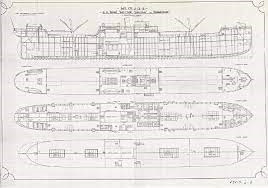 Ships layout plans for the Boma and her sister-ships the Matadi, Coomassie and SoudanThe SS Boma was a cargo ship displacing 2694 gross registered tonnes (G.R.T) at launch, built in 1889 by the Naval Construction & Armament Co. Ltd of Barrow-In-Furness for Elder Dempster Lines Ltd – African Steamship Co. of Liverpool. She was 311 feet long and 39 feet at the beam and was equipped with 1 triple-expansion steam engine generating 240hp to power a single screw, allowing her to achieve a maximum of 11 knots. She spent her entire service life with her initial owners, serving into the First World War.
On the 11th of June 1918, the Boma was 10 miles Southwest of Beer Head near Sidmouth, carrying ‘general cargo’ from Belfast to St. Helens in the Isle of Wight, when she was attacked by U-Boat UB-80 commanded by Max Viebeg. The first thing her crew knew of any attack was a violent explosion which suddenly occurred in her numbers 3 and 4 holds at 22:15. Following this the Boma began to sink rapidly, her 36 crewmen taking to her boats. The survivors were subsequently picked up by Royal Navy patrol boats and landed in Brixham harbour.
SS Lord Stewart – 16th of September 1918
The Lord Stewart was a collier built in 1905 by S. P. Austin & Son Ltd of Sunderland and entered service with the The SS Lord Stewart Londonderry Steamers based out of Seaham. She was 248 feet long and 36 feet at the beam, displacing 1445 gross registered tonnes (G.R.T) at launch. She was equipped with 1 triple-expansion steam engine providing 187hp to a single screw. She spent her entire service life with her initial owners, serving in the First World War.
On the 16th of September 1918, the Lord Stewart was empty of cargo, making her way from Cherbourg back to Barry in South Wales to collect another load of Welsh coal when she was sighted by Thomas Bieber in command of U-Boat UB-104 11.25 miles South of Sidmouth. Bieber then proceeded to torpedo the Lord Stewart on her port side right between her rigging, causing her to sink rapidly. Her crew took to her boats and made it away from the ship, with one Spanish seaman later identified as Miguel Delgado going down with her. The Lord Stewarts remaining 20 crewmen were later picked up by a Royal Navy patrol vessel and landed at Torquay.
View more
The Lifeboat
Teignmouth’s lifeboat during the war years was the Alfred Stanforth whose crew went to the rescue of ships in 1916 and 1917.
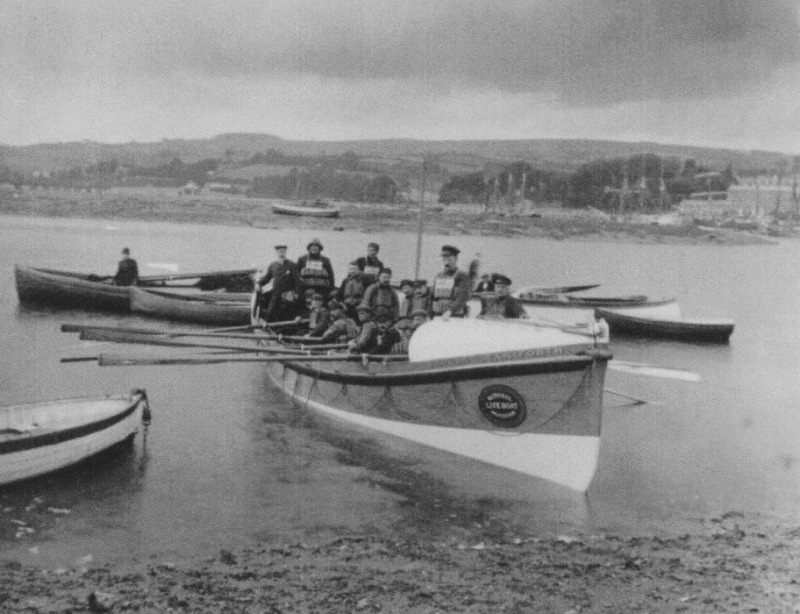 The Alfred Stanforth Lifeboat
Acknowledgements:
Teign Diving Centre www.teigndivingcentre.co.uk
Richard Clarke www.divesouthdevon.com
www.wrecksite.eu
Westcountry Harbour. H J Trump
The History of the Teignmouth Lifeboats. Jeff Morris
Wreck and Rescue off the coast of Devon. G Farr
