Whilst there were a variety of songs which both commended and criticised the First World War the majority of poems that were written during the war focused on the horrors that the soldiers at the Front endured.
Today perhaps the most famous poem of the era is the poem written in 1915 by John McCrae that inspired the wearing of red poppies to commemorate the dead of the wars:
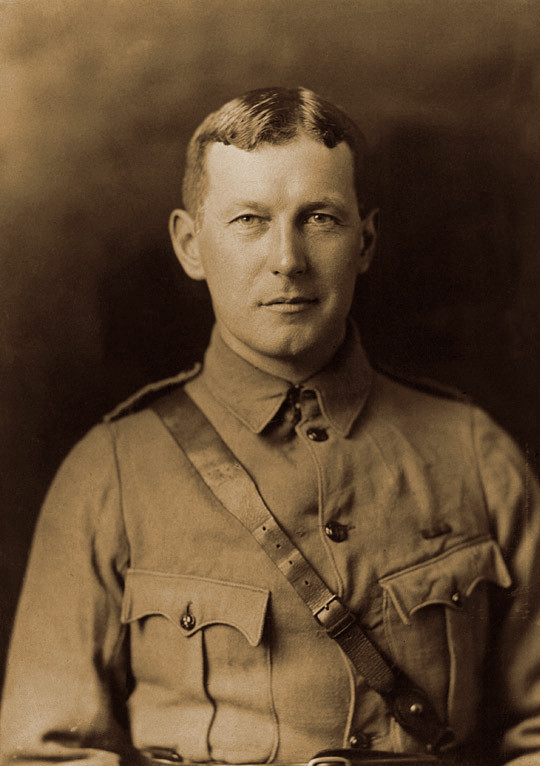 Lieutenant Colonel John McCrae, MD was a Canadian poet, physician, author, artist and soldier during World War I, and a surgeon during the Second Battle of Ypres. (Photo Public Domain)
In Flanders fields
In Flanders fields the poppies blow
Between the crosses, row on row,
That mark our place; and in the sky
The larks, still bravely singing, fly
Scarce heard amid the guns below.
We are the Dead. Short days ago
We lived, felt dawn, saw sunset glow,
Loved and were loved, and now we lie
In Flanders fields.
Take up our quarrel with the foe:
To you from failing hands we throw
The torch; be yours to hold it high.
If ye break faith with us who die
We shall not sleep, though poppies grow
In Flanders fields.
Many of the poets, such as Rupert Brooke, Isaac Rosenberg and Wilfred Owen, were serving soldiers in the trenches. Brooke was known for his idealistic war sonnets written during the First World War, especially "The Soldier".
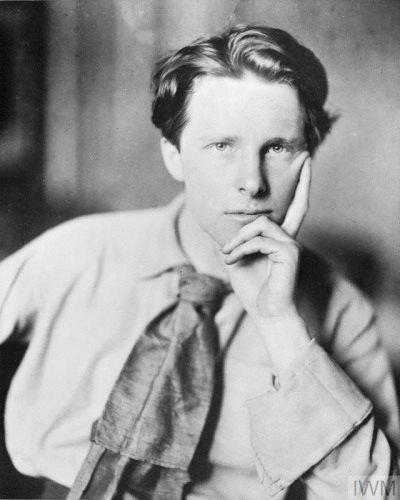 The war poet Rupert Brooke © IWM (Q 71073)
Sonnet V: The Soldier (1915) by Rupert Brooke
If I should die, think only this of me:
That there’s some corner of a foreign field
That is for ever England. There shall be
In that rich earth a richer dust concealed;
A dust whom England bore, shaped, made aware,
Gave, once, her flowers to love, her ways to roam,
A body of England’s, breathing English air,
Washed by the rivers, blest by suns of home.
And think, this heart, all evil shed away,
A pulse in the eternal mind, no less
Gives somewhere back the thoughts by England given;
Her sights and sounds; dreams happy as her day;
And laughter, learnt of friends; and gentleness,
In hearts at peace, under an English heaven.
As the war continued the soldier poets became increasingly angry at the futility of the war and the suffering they saw around them. Their frustration and sadness was expressed in some of the most strident poems of the war, such as Wilfred Owen’s Anthem for Doomed Youth and poems, such as The General by Siegfried Sassoon
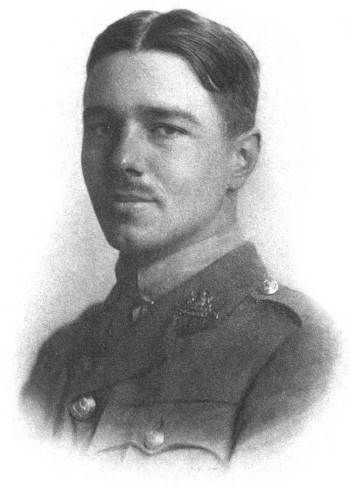
Anthem for Doomed Youth by Wildred Owen
What passing-bells for these who die as cattle?
— Only the monstrous anger of the guns.
Only the stuttering rifles' rapid rattle
Can patter out their hasty orisons.
No mockeries now for them; no prayers nor bells;
Nor any voice of mourning save the choirs,—
The shrill, demented choirs of wailing shells;
And bugles calling for them from sad shires.
What candles may be held to speed them all?
Not in the hands of boys, but in their eyes
Shall shine the holy glimmers of goodbyes.
The pallor of girls' brows shall be their pall;
Their flowers the tenderness of patient minds,
And each slow dusk a drawing-down of blinds.
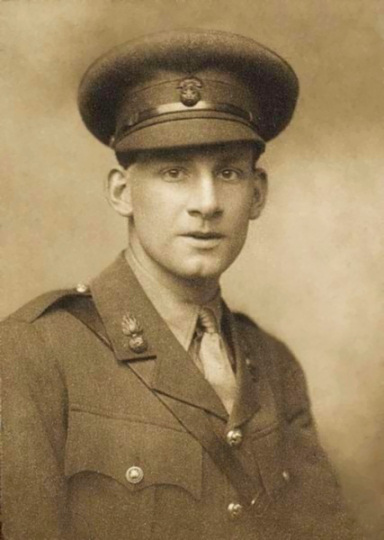 War poet Siegfried Sassoon (May 1915) by George Charles Beresford. (Public Domain)
Base Details by Siegfried Sassoon (1918)
If I were fierce, and bald, and short of breath,
I'd live with scarlet Majors at the Base,
And speed glum heroes up the line to death.
You'd see me with my puffy petulant face,
Guzzling and gulping in the best hotel,
Reading the Roll of Honour. 'Poor young chap',
I'd say – 'I used to know his father well;
Yes, we've lost heavily in this scrap'.
And when the war is done and youth stone dead,
I'd toddle safely home and die – in bed.
The General by Siegfried Sassoon( 1917)
“Good-morning, good-morning!” the General said
When we met him last week on our way to the line.
Now the soldiers he smiled at are most of 'em dead,
And we're cursing his staff for incompetent swine.
“He's a cheery old card,” grunted Harry to Jack
As they slogged up to Arras with rifle and pack.
But he did for them both by his plan of attack.
