
Sub-Lieutenant Hugh Alexander Massey
6th (Howe) Battalion, Royal Naval Division
Date of Birth: 2nd March 1883
Place of Birth: Croyden, Surrey
Date of Death: Died 26 August 1915 at Gallipoli, aged 32
Buried: Mudros Military Cemetery Cemetery on the Greek island of Limnos (Lemnos) in the north-east Aegean Sea.
Remembered on the Teignmouth War Memorial
Awarded the 1914-15 Star, the British War Medal and the Victory Medal
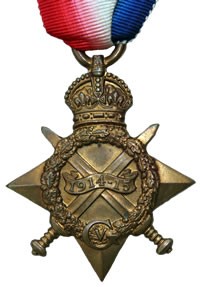
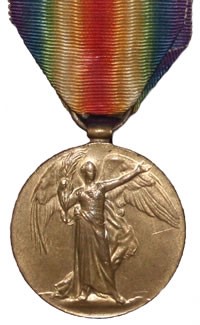
Sub-Lieutenant Hugh Alexander Massey, age 32. Born 2 March 1883, in Croydon, Surrey, he was the son of Mr. Hugh Holland Massey, bank clerk, and his wife Amelia.
The 1891 census showed him with his family in Croydon, he was at the same address in 1901 working as a bank clerk. His parents later moved to "Hermosa", Teignmouth.
On August 22, 1908, Hugh married Leah Alice Wheldon from Mauritius. In February 1909, Hugh and Leah sailed to Canada on the Empress of Britain. He worked as the provincial manager of the London and Lancashire Life Assurance Company in Vancouver, Canada. Following his death his wife was shown living at Minden Lodge, Teignmouth.
Hugh enlisted 30 July 1914 as a CPO from the Royal Naval Volunteer Reserve. He joined the recently formed Royal Naval Division in October and was attached to the Maintenance Unit. He was commissioned Temporary Sub Lieutenant, Royal Naval Division on 11 January 1915 with the Benbow Battalion.
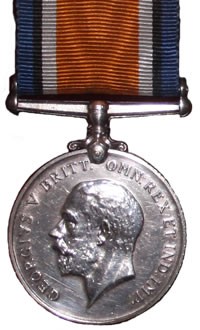
He sailed as part of the Mediterranean Expeditionary Force to the Dardanelles (Gallipoli Campaign) in May and transferred to Howe Battalion on 12th June.
His name was in the 'wounded' list of 22 August issued by the War Office.
His citation reads “On 22/8/15 he sighted a machine gun lying in front of the Turkish trenches and, despite efforts to dissuade him, he proceeded to try and capture it before the Turks could reach it. In doing so he was wounded in the thigh”, he died of wounds aboard HS Gascon, on 26 August 1915.
Buried in East Mudros Military Cemetery, Greece. Remembered on Seafront Memorial and St. James’ Church Memorial Window, Teignmouth.
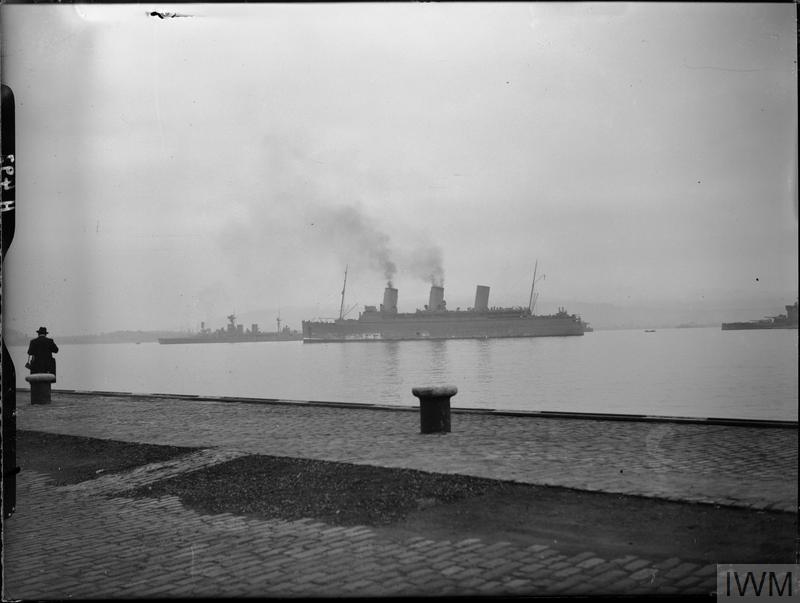 SS Empress of Britain containing the first batch of Canadian soldiers to arrive in Britain. © IWM (H 497)
The 1st Royal Naval Division
At the begining of the First World War on 4 August 1914 there were 20-30,000 Royal Navy Reserves more than there were available places on warships.
They became the 1st Royal Naval Division consisting of the 1st and 2nd Naval Brigades and the Royal Marine Brigade.
The 2nd Royal Naval Brigade had eight battalions named after naval commanders, 1st (Drake), 2nd (Benbow), 3rd (Hawke), 4th (Collingwood), 5th (Nelson), 6th (Howe), 7th (Hood) and 8th (Anson). The Battalions did not all serve at once, but all were assigned to the brigade during the war.
Between 20 September and 5 October 1914 the units of the Division landed at Dunkirk to assist in the defence of Antwerp, Belgium. There were losses and approximately 1500 men were interned in the Netherlands.
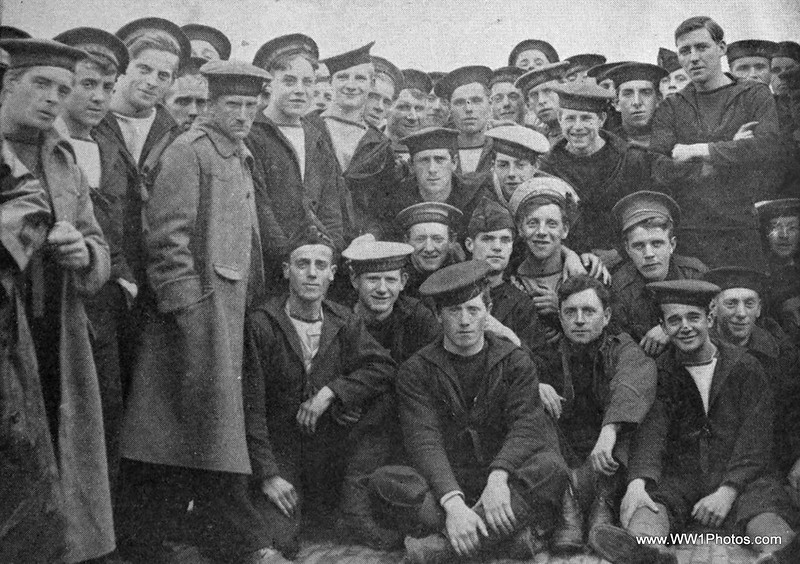 Some of the Royal Naval Division men who were interned in the Netherlands. http://ww1photos.com
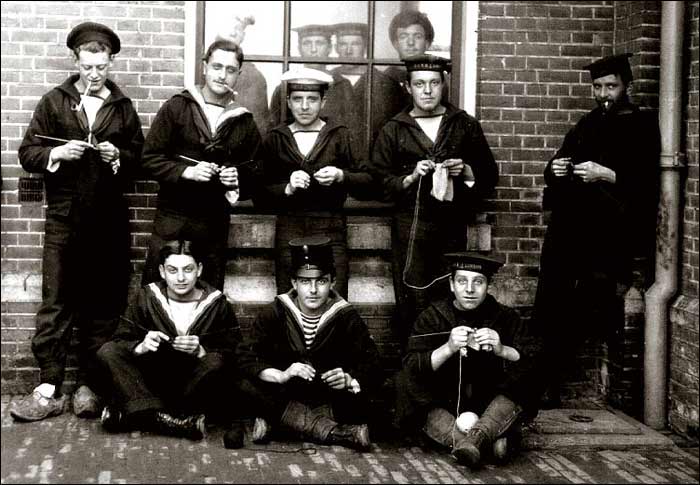 Knitting British sailors interned in the Netherlands. The Heritage of the Great War
The other men of the Division returned to England on 11 October 1914 where they were re-equipped and had further training.
In 1915 they moved to Eygpt and fought at the Battle of Gallipoli (Turkey 17 February 1915 – 9 January 1916) at Anzac Cove and Cape Helles.
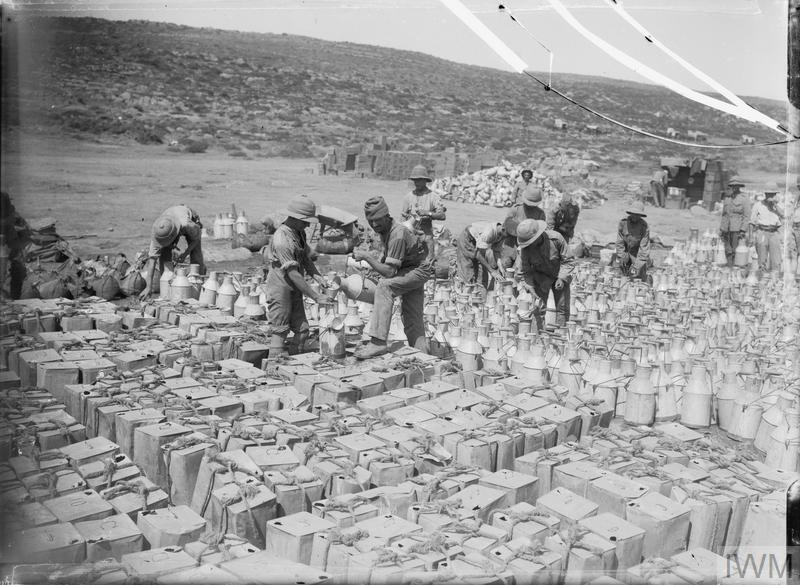 Filtering water before it is put into covered cans. © IWM (Q 13448)
 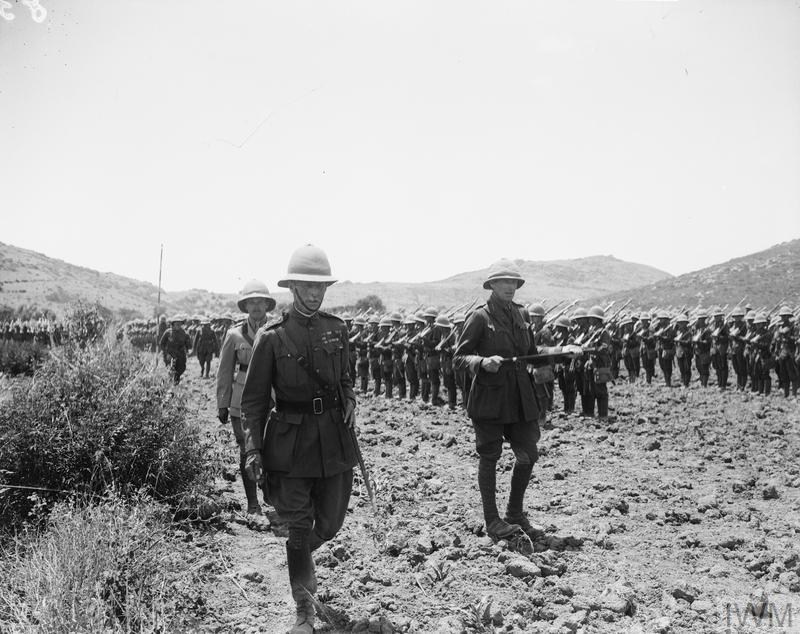 General Sir Ian Hamilton GCB inspects the Howe Battalion of the 2nd Royal Naval Brigade, commanded by Lieutenant Colonel Collins, at Kephalos Camp, Imbros, 18th June 1915. © IWM (Q 13297)
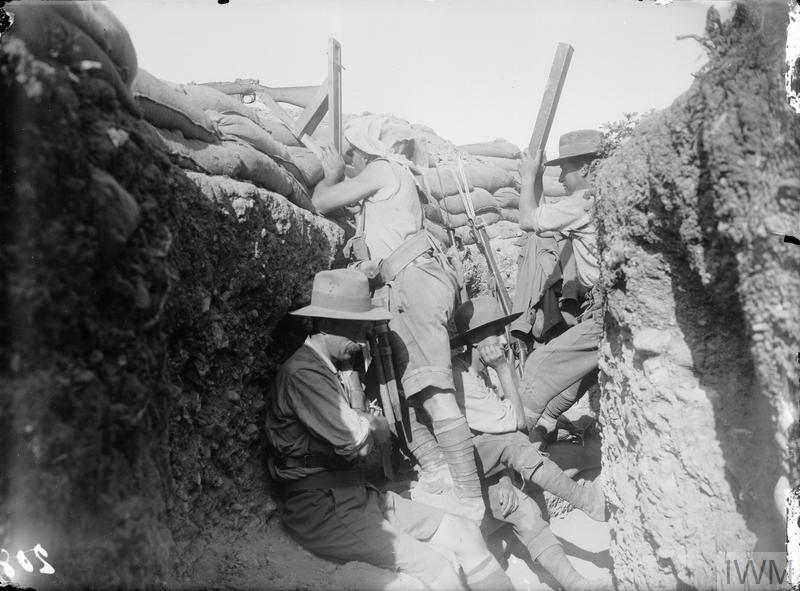 Defence of the ANZAC. Men of the Royal Naval Division and Australians in the same trench. One is using a "sniperscope" and another a periscope. © IWM (Q 13427)
