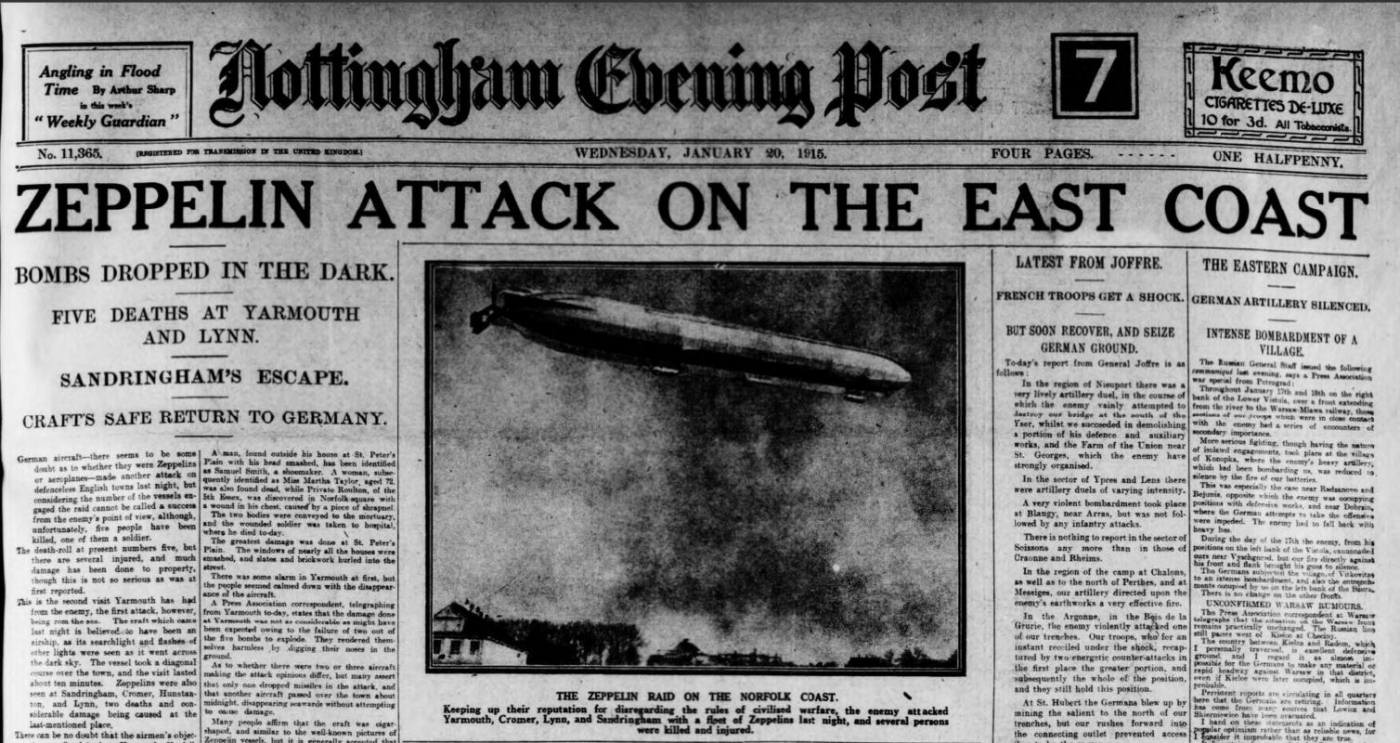
As fighting continued on the ground, in the Great War battles took place in the skies too for the first time. Huge airships carrying bombs flew over cities and fighter planes took part in deadly dog fights.
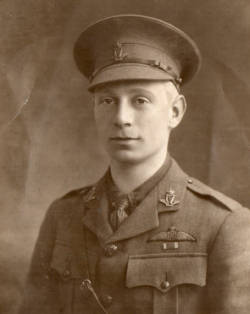
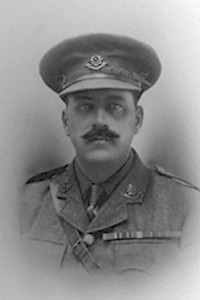
On 26 August 1914, Lieutenant Col. (Acting) Hubert Dunsterville Harvey-Kelly DSO, MiD of Teignmouth, gained the first ever British victory in air-to-air combat whilst flying an unarmed aircraft by maneuvering as if to hit a German Taube 2, then by other aggressive flying and using his pistol, he forced the aircraft to the ground.
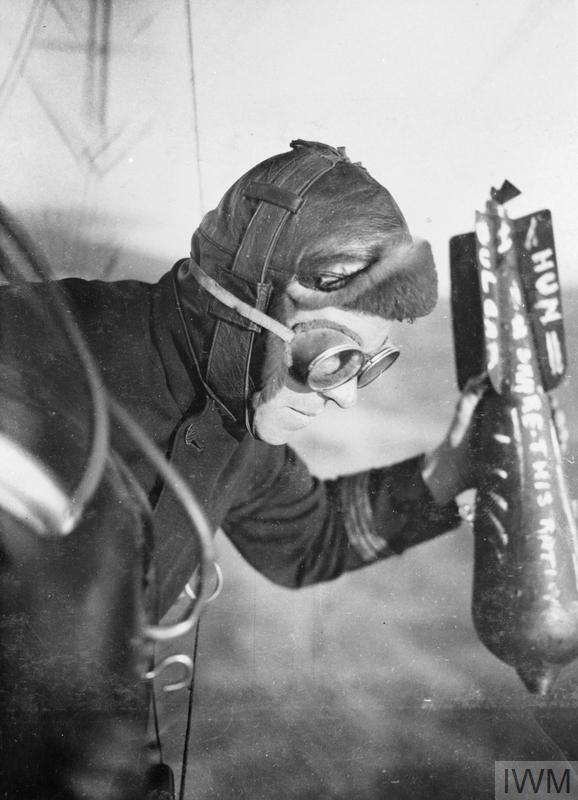 A British airman dropping a bomb.© IWM (Q 67698)
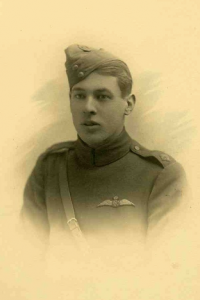
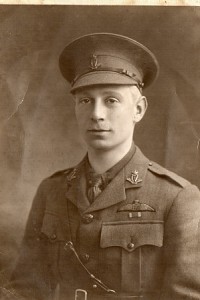
2nd Lieutenant Pilot Richard “Dick” Borlase Jenkins (the son of Charles and Maud Jenkins of Teignmouth) was shot down by a German Fokker plane as he was returning from bombing a German depot.
During Dick's time in the The Royal Flying Corps, bombs were dropped by hand from airplanes (or airships) and aimed by the naked eye.
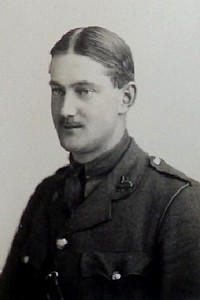
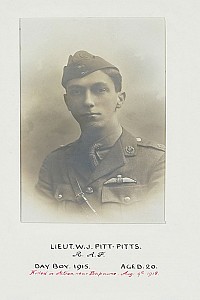
Lieutenant Walter James Pitt Pitts of Teignmouth was engaged in bombing and photographing expeditions over German lines.
Captain Gerald Blunt Lucas of 13 Squadron RFC was involved in aerial combat, shot and died of his wounds. Gerald, was the youngest son of Lt. Colonel Charles Arthur de Neufville Lucas and his wife Maud of Oakley, Teignmouth.
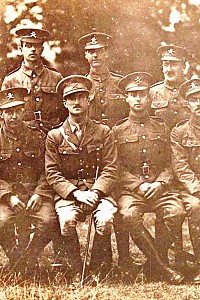
Captain Hugh Fanshawe Glanville's family also lived in Teignmouth, Hugh trained other pilots.
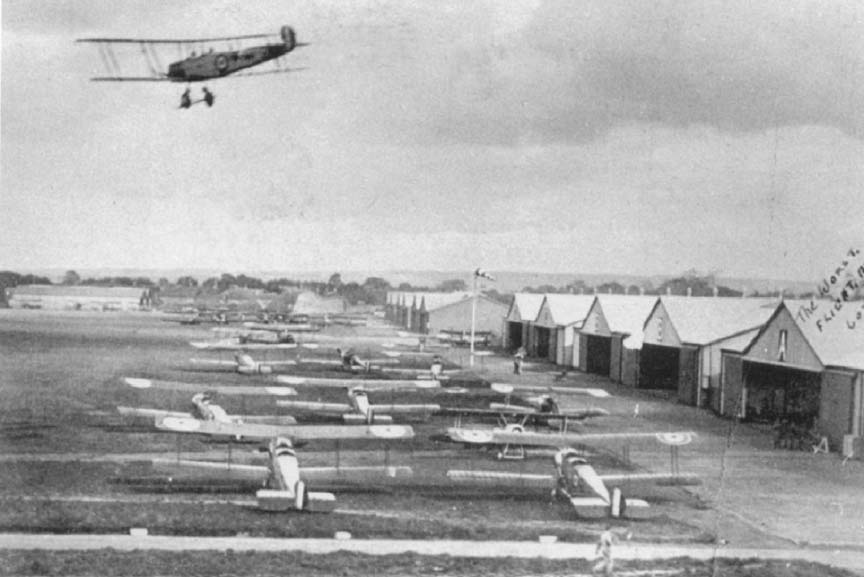 British School for Special Flying. Photo by WWI Resource Centre
In August 1916 the RFC visited Teignmouth in the form of Captain Arthur Claud Wright. Arthur married Miss Elise M. Rodwell of Pezula, New Road, Teignmouth on 4 August 1916. His plane was shot down in 1917 and he was wounded, but made it back over the lines before crashing.
Teignmouth and Shaldon men in the Royal Flying Corps