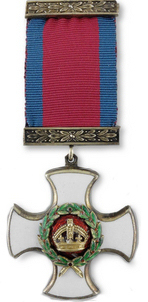
 Distinguished Service Order
Personal possessions of HD Harvey-Kelly. Photo by Myleskelly
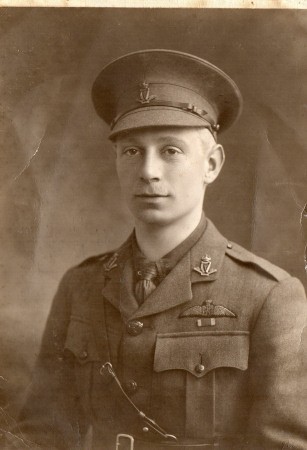
Lieutenant Col. (Acting) Hubert Dunsterville Harvey-Kelly DSO, MiD
Royal Irish Regiment, then 19th Squadron, Royal Flying Corps
Died of Wounds
Date of Birth: 1890
Place of Birth: Teignmouth, Devon
Date of Death: 29th April 1917 aged 26
Buried: Buried at Browns Copse Cemetery, Roeux
Awarded the Distinguished Service Order (D.S.O.) medal, Mentioned in Dispatches
The King has been graciously pleased to give orders for the following appointments to the Distinguished Service Order in recognition of the meritorious services of the undermentioned Officers during the war:-
To be Companions of the Distinguished Service Order.
London Gazette issue 29111

Lieutenant Col. (Acting) Hubert Dunsterville Harvey-Kelly DSO was born in Teignmouth 1880, the son of Colonel H.H. Harvey-Kelly (Indian Army), and nephew of General Lionel Dunsterville.(Although the Harvey-Kelly family were from County Westmeath, Ireland, Hubert was born in Devon. He and the family lived a while at Berry Pomeroy, the Dunsterville family home in Devon and once married to Florence, he later lived at 27 Bickford Lane, Teignmouth.
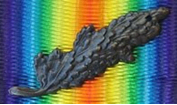 Mentioned in Despatches
  London Gazette clipping 15 June 1916
On leaving Sandhurst, he applied to the Royal Irish Regiment, joining them on 5th October 1910, commissioned on 23rd October 1910. He gained his Royal Aero Club aviation certificate No.501 on 30th May 1913 in a Maurice Farman Biplane at the Central Flying School, Upavon.
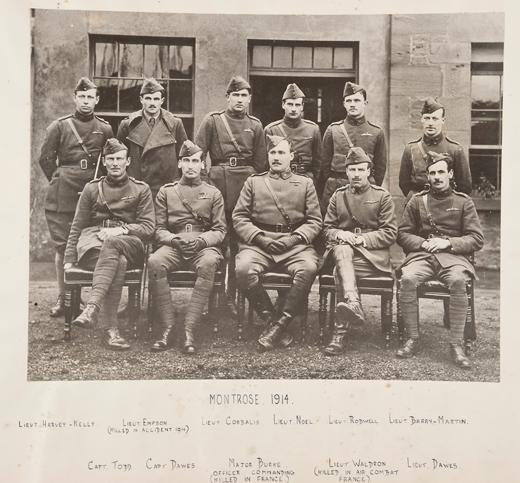 No2 Squadron Royal Flying Corps (Hubert is top left). Public Domain
He was commissioned into the Royal Flying Corps Reserve on 14 August 1913 before joining No 2 Squadron based in Montrose, Scotland, a new base set up to patrol the North Sea and protect the fleet.
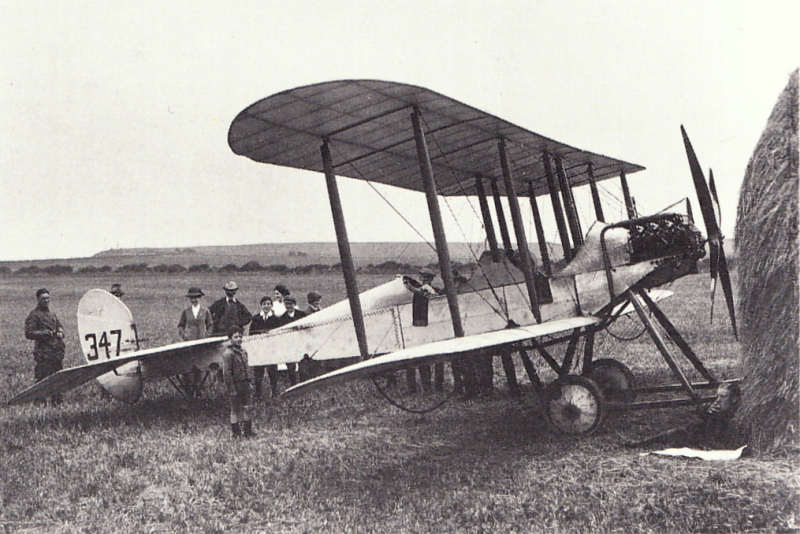 Lieutenant H D Harvey-Kelly seen resting by the haystack, was the first British pilot to land in France after the outbreak of war. CC BY-SA 3.0
A major in the RFC (made up to Acting Lieutenant Colonel), Hubert set off on 13 August 1914 with other RFC pilots for Amiens, France in support of the British Expeditionary Force.
His historic flight from Dover having taken 1 hour 55 minutes. His was the first RFC aircraft to arrive in France.
Shortly after, on 26 August 1914, he gained the first ever British victory in air-to-air combat despite flying an unarmed aircraft. By maneuvering as if to hit a German Taube 2, then by other aggressive flying and using his pistol, he forced the aircraft to the ground.
He reportedly had a habit of spitting over the side of his aircraft if 'Archie' (anti-aircraft fire) came too close, one day he returned from a patrol insisting that he "had no spit left".
On 18 February 1915 he was awarded the Distinguished Service Order (DSO) for "Services in connection with operations in the field". He was promoted Captain on 23 May 1915, and Major in January 1916.
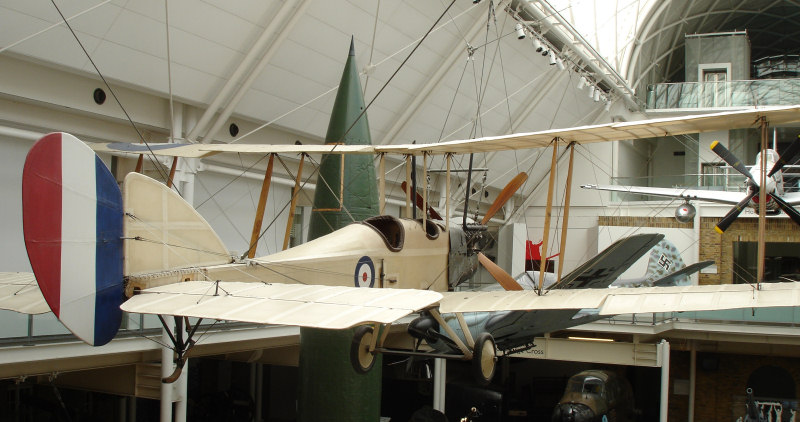 Harvey-Kelly's BE2 is celebrated in the IWM Collection, where there is also a Memorial plaque. (Photo by Myleskelly)
Harvey-Kelly was not due to fly on the day of his final flight, partly due to a rule that Squadron Commanders did not fly (although many did) and partly due to a last-minute switch. However, because Baron von Richthofen, The Red Baron, was operating in the area he went up and became a victim of what the RFC called Bloody April when they lost 245 aircraft.
Major Harvey-Kelly and Lieutenant Applin were reported as killed in action, although Harvey-Kelly died of head wounds three days later on 29 April 1917 in a German Hospital. He is buried in the Browns Copse Cemetery, Roeux, France.

