Special thanks to Norfolk Libraries
Major Frederick William Birch
4th (Service) Battalion, South Wales Borderers
Died of Wounds
Date of Birth: 1868
Place of Birth: India
Date of Death: 17 April 1916 aged 48
Buried: Remembered on the Basra Memorial
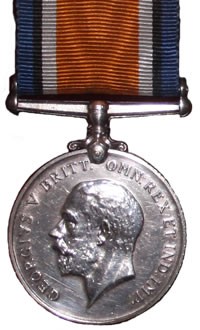
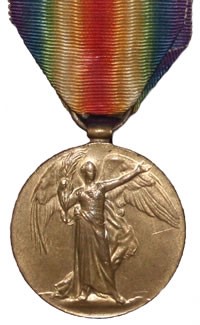
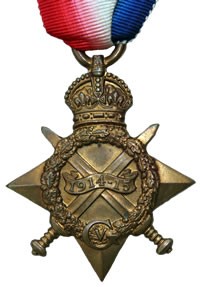
Awarded the India General Service Medal (2 clasps), the India Medal (four clasps), the 1914-15 Star, the British War Medal and the Victory Medal
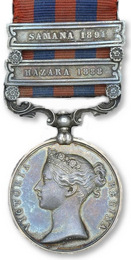 India General Service medal
Major Frederick William Birch, age 48.
He was born 1868 in India, the son of Harry Holwell Birch, an Indian Military officer and his wife Sarah Henrietta Mawson.
Mrs Birch was widowed in 1878, at a young age, and returned with her young family to live at Westbury on Trym.
Frederick was first commissioned 11 February 1888. He served at Samana and Hazara in 1891 and in the Tirah Punjab Frontier Campaign during 1897-1898 with the 29th Punjabs.
 India Medal
His roles included Regimental Commissariat and Transport Officer.
Major Birch married Mary Dorothea Mackenzie in 1910 and retired on 22 March1911, living for a while in Parkstone, Dorset.
He and his wife came to live in Shaldon shortly before the outbreak of war and he was active as a recruiting officer before offering his services to the War Office and rejoining the 4th Battalion Welsh Borderers. He sailed for the Dardanelles.
Major Birch died of wounds on 17 April 1916.
The death of Major Birch was reported in The Western Times of 28 April and sympathy was expressed for his widow who was left with three young children.
Remembered on the Basra Memorial.
The Basra Memorial commemorates more than 40,500 members of the Commonwealth forces who died in the operations in Mesopotamia from the Autumn of 1914 to the end of August 1921 and whose graves are not known.
The Seige of Kut
In December 1915, in Mesopotamia (Modern Iraq), a British-Indian garrison in the town of Kut was put under siege by the Turks. The already weakened defenders were soon starving and sickness became rife.
The 4th Battalion of the South Wales Borderers left Eygpt for Mesopotamia in February 1916 as part of the force sent to relieve the garrison.
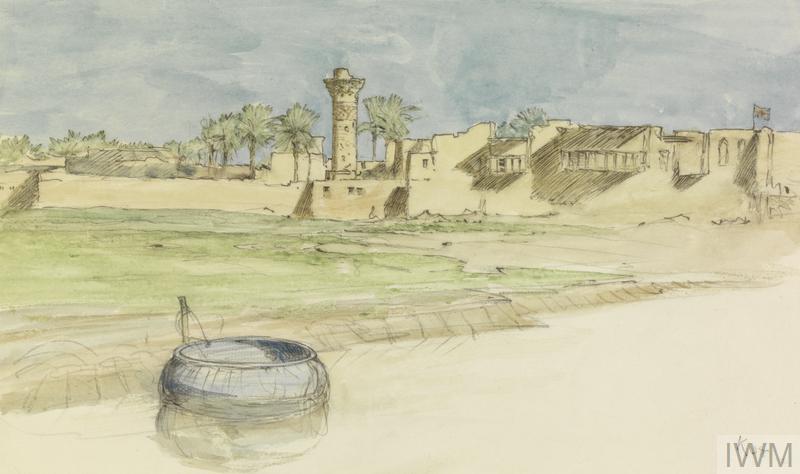 A view across part of Kut. A bomb damaged minaret and a British Union Jack flying from a flagpole. © IWM (Art.IWM ART 2436)
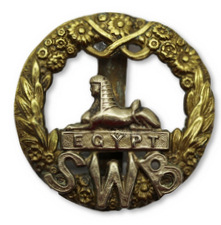 South Wales Borderers
Cap Badge
The relief force was called the Tigris Corps.
The 4th Battalion South Wales Borderers were in the 10th Brigade of the 13th Division of the Tigris Corps.
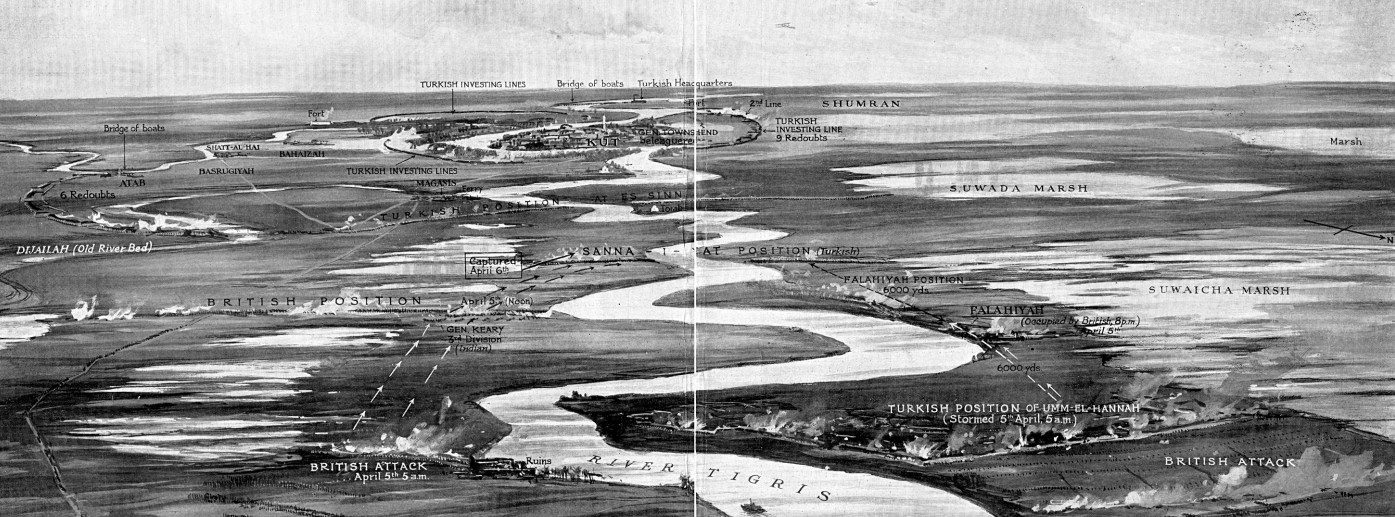
On 4 April 1916 the British attacked Hanna as part of the third attempt to relieve Kut. Frederick's battalion pushed on under heavy machine gun fire over ground devoid of cover and despite severe losses reached a line about 800 yards from Turkish trenches.
A few days later, on 8 April, came the night assault on the Turkish position at Sannaiyat, with 4th Battalion in the front line. The attack failed with heavy losses. (Royal Welsh.org).
 Mounds of earth marking the graves of the British in Kut. Bluejackets of the Royal Navy stationed at Kut have collected empty shrapnel cases from the old trenches and placed one on all known spots where dead are buried. © IWM (Q 24534)
The Tigris Corps made several attempts between January and March 1916, to lift the siege of Kut al-Amara; all of which were unsuccessful.
The garrison surrended on the 29 April 1916 and 13,000 men were taken into captivity and marched away. A third died from disease, maltreatment and malnutrition.
"None of them fit to march five miles ... full of dysentery, beri-beri, scurvy, malaria and enteritis; they had no doctors, no medical stores and no transport.
The hot weather, just beginning, would have meant much sickness and many deaths, even among troops who were fit, well-cared for and well supplied.".
Geoffrey Elton, historian and war poet
(He saw the men being marched away)
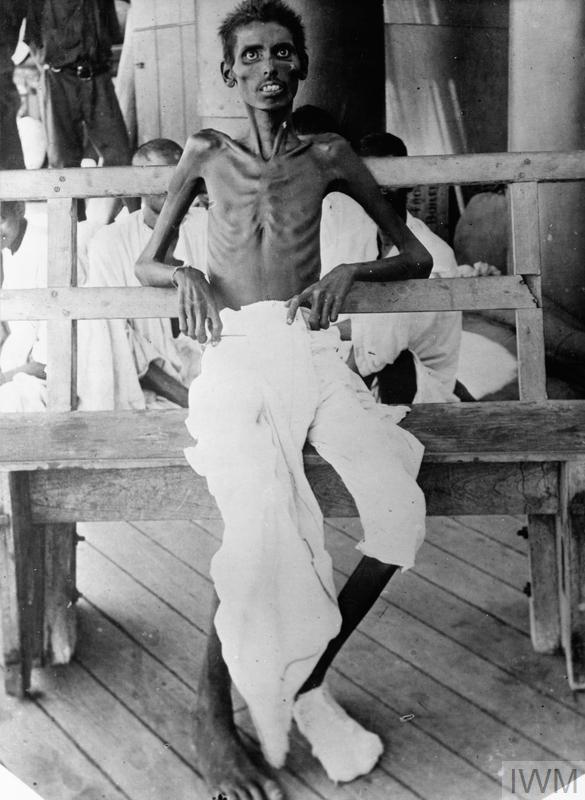 This emaciated Indian soldier was photographed after he had been liberated during an exchange of prisoners. © IWM (Q 79446)
We know of seven local men who were at Kut, 3500 miles from home.
Six were in the Tigris Corps, the force sent to relieve the garrison:
Private Alfred Albert Vicary of Teignmouth, aged 16, died of wounds.
Private Robert Dewhurst of Teignmouth died of disease four days after the garrison surrendered.
Major Ernest Bird Barratt of Teignmouth was wounded in the battle, taken prisoner and died of his wounds.
Major Frederick William Birch of Shaldon died of wounds in the Battle of Hanna.
Private James Lambe of Shaldon, was believed to have been taken prisoner when the garrison surrrended and died later.
Private William Alfred Prowse of Teignmouth, was part of the Garrison force when Kut had been retaken in 1917, William died of heatstroke.
Lance Corporal Charles Francis Stephens of Teignmouth was part of the relief force. Charles survived WW1 but was killed in WW2 when Teignmouth was heavily bombed by the Luftwaffe.