
Private William Driver Nathan
1/19th (County of London) Battalion (St Pancras), London Regiment
Killed in Action
Date of Birth: 1893
Place of Birth: Teignmouth, Devon
Date of Death: 2 October 1916 in France, aged 23
Buried: Remembered on Thiepval Memorial, Somme; Seafront Memorial and St James’ Church Memorial Window, Teignmouth, Devon
Awarded the British War Medal and the Victory Medal
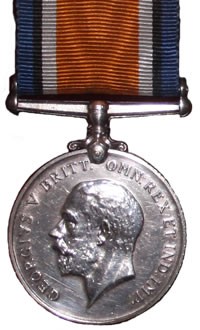
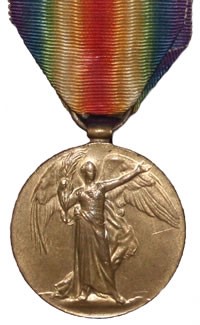
Private William Driver Nathan age 33.
William was born in 1883 the eldest son of John Mills Nathan, a fisherman of Teignmouth, and his wife Annie. The family, including William’s sister Florence and brother, John, lived at 1 Terranova Place as shown in the 1891 census.
By 1901 the family were living in Somerset Place, and William was an apprentice printer. In 1908 William married Hilda May Priest at Newport in Monmouthshire, by 1911 census he was a Printer (letterpress) and living at 31 Teign Street with his wife Hilda. He worked on both the Teignmouth ‘Post’ and the ‘Gazette’. He later married Phyllis Parsons registered in 1916 at Newton Abbot.
William was residing in Exeter when he enlisted with the Somerset Light Infantry, service no. 24089.
 1/19th (County of London) Battalion (St Pancras) cap badge
He was posted to 1st/19th London Regiment (St Pancras), service no. 7254, in August 1916 and went to France in August 1916.
He was reported as missing between 9 September and 2 October 1916, whilst his regiment was involved in the clearing of High Wood which resulted in many casualties. William was recorded as having died in action on 2 October 1916.
Remembered on Thiepval Memorial, Somme; Seafront Memorial and St James’ Church Memorial Window, Teignmouth. His younger brother was serving with the RN Trawler section.
High Wood and Transloy Ridges
The Battle of the Somme (Somme Offensive) was a series of attacks and battles in the Somme region of France between 1 July 1916 and November 18th 1916.
The 19th London Regiment fought in The Battle of Flers-Courcelette, which included the capture of High Wood.
 British troops preparing the way for bringing out a German 5.9 gun captured in High Wood. © IWM (Q 4367)
The battle for the 75 acres of High Wood started on July 14. Within two weeks of onslaught from the artillery of both sides all that remained of the woodland was 75 acres of stumps, craters and trenches.
The British attacked the German trenches but every attempt was unsuccessful until September 15th 1916 when tanks went forward and the 19th were able to capture the German trenches.
The 19th then pressed on to the Battle of Transloy Ridges (1-3 October 1916) in which they captured Eaucourt l'Abbaye.
