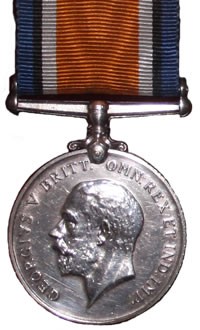
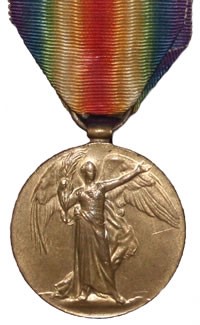
Date of Birth:Quarter 4, 1897 Place of Birth:Stokeingteignhead , Devon Date of Death:4 September 1916 aged 18 Buried:Combles Communal Cemetery Extension
Private Henry ("Harry") Walter J. Hill son of George and Thirzina Hill (nee Aggett) of Stokeinteignhead; brother of George (see Fallen).
Born in Stokeingteignhead in the 4th quarter of 1897.
In 1901, the family were living at the Village, Stokeinteignhead, Devon. The census shows that George Hill is 41, born in 1860 and a 'Carter On Farm' and Thirzena Hill is 41, born in 1860.
Henry and his siblings
Ida M Hill 1885
George G Hill 1889
Gertrude Hill 1890
Emily R G Hill 1895
Henry W J Hill 1898
Violet E M Hill 1900
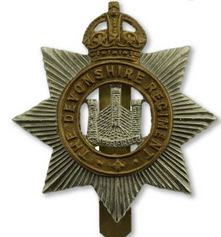
The 8th and 9th Battalions of the Devonshire Regiment
Devonshire Regiment cap badge
The 8th and 9th Battalions of the Devonshire Regiment were formed in 1914 from war-time volunteers.
After very little training they landed at Le Havre in France on the 28th July, 1915 and moved to the Front in August 1915.
The men had only a very brief experience of trench warfare when on the 25th September 1915, the British Army launched a massed attack against the German defences, this was later to be known as the Battle of Loos.
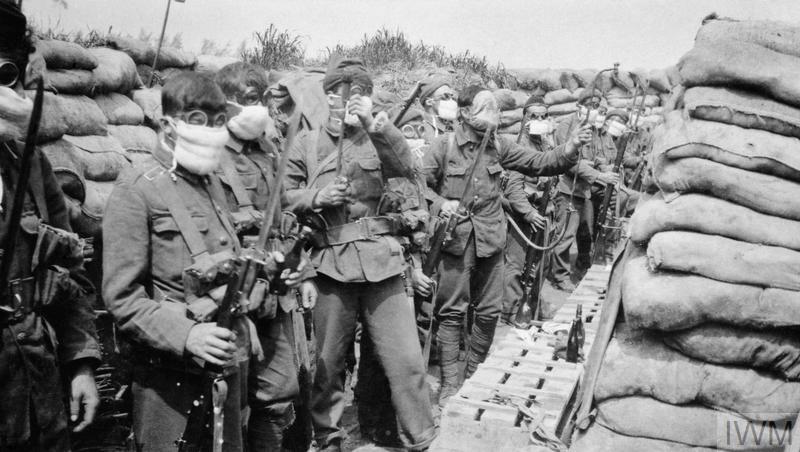
At the Battle of Loos both sides used poison gas as a weapon.
This was the first time that the British used poison gas.
After they released the gas the wind changed and a green blanket of gas, dust and smoke as high as a two-storey house covered some of the British troops, it was very difficult to see anything, some men had terrible difficulty breathing and others died later because of the damaging effects of the gas.
'The gas hung in a thick pall over everything, and it was impossible to see more than ten yards. In vain I looked for my landmarks in the German line, to guide me to the right spot, but I could not see through the gas.'
Account by George Wilfred Smith, 2nd The Leicestershire Regiment, to his fiancée.
Before the men left the safety of their trenches and went 'over the top' to capture the enemy positions the Gunners would often fire a huge artillery barrage to shatter the enemy's barbed wire and other defences and kill defending troops.
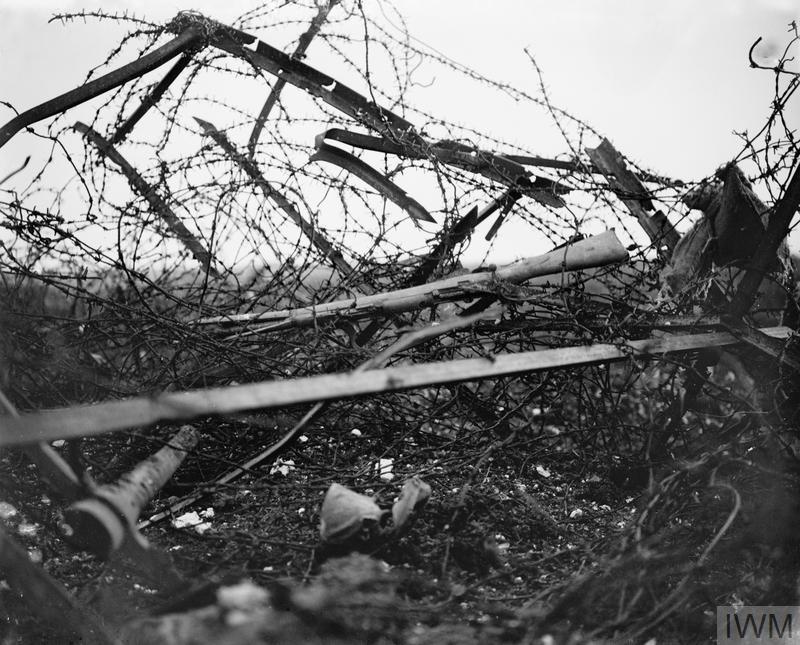
In this battle the artillery barrage had not cleared all the barbed wire, so the Devons had to cut their way through whilst the Germans fired machine-guns at them.
The 8th and 9th Devons were battalions with 1000 men in each unit. In a single day they had more than 1000 casualities and 500 men died or went missing.
Casualties at the Battle of Loos on the 25th September 1915 were the worst in a single day for the British army, with some 8,500 dead.
The Battle of Loos lasted from 25th September to 15th October, 1915.
The First Day of the Somme
On July 1, 1916 the 9th Devons, with the 8th Devons in support, headed the attack on the German front line near Marmetz.
The British artillery had bombarded the German Lines in preparation but this had failed to destroy machine-gun positions.
The 8th and 9th Devons had been fighting continuously from July 1st, 1916, and were behind the lines resting when on the 3rd September they were ordered back to the front to take part in clearing the Eastern corner of Delville Wood, in front of Ginchy.
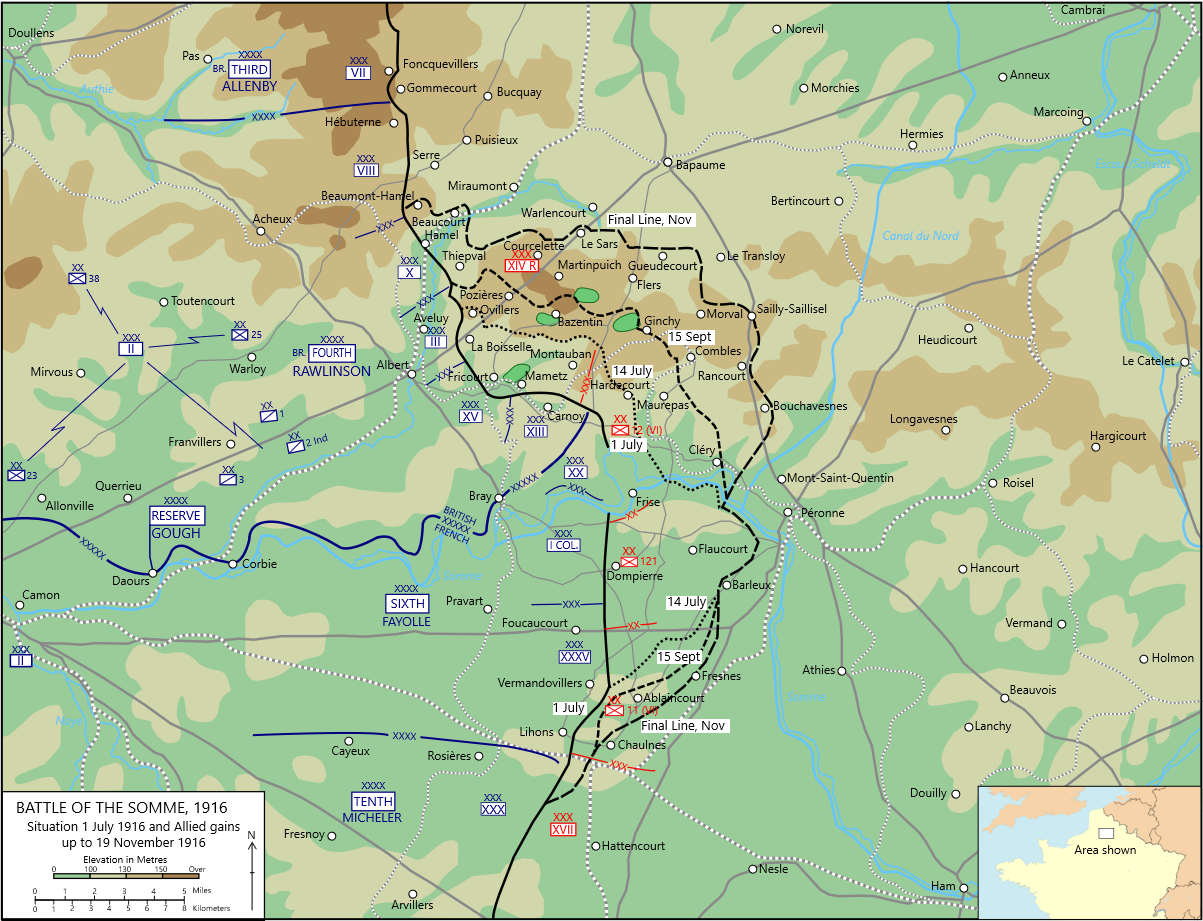
Harry Hill - Battle of the Somme map 1916 - Giro720 [Public domain]
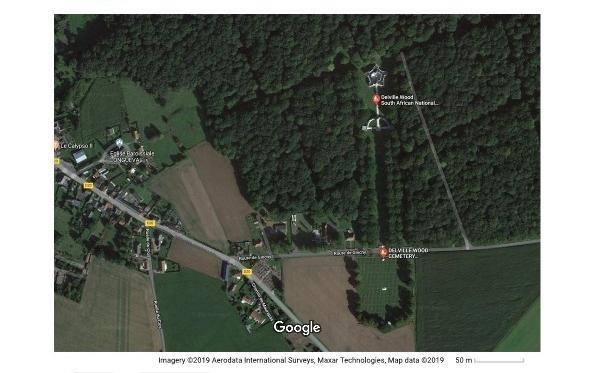
The Battle of Delville Wood (15 July – 3 September 1916) was a series of engagements in the 1916 Battle of the Somme. Delville Wood (Bois d'Elville), was a thick tangle of trees, chiefly beech and hornbeam with dense hazel thickets, intersected by grassy rides, to the east of Longueval.
As part of a general offensive starting on 14 July, which became known as the Battle of Bazentin Ridge (14–17 July), General Douglas Haig, Commander of the British Expeditionary Force, intended to capture the German second position between Delville Wood and Bazentin le Petit.
The attack achieved this objective and was a considerable though costly success. British attacks and German counter-attacks on the wood continued for the next seven weeks, until just before the Battle of Flers–Courcelette (15–17 September), the third British general attack in the Battle of the Somme.
Harry Hill - Delville wood map
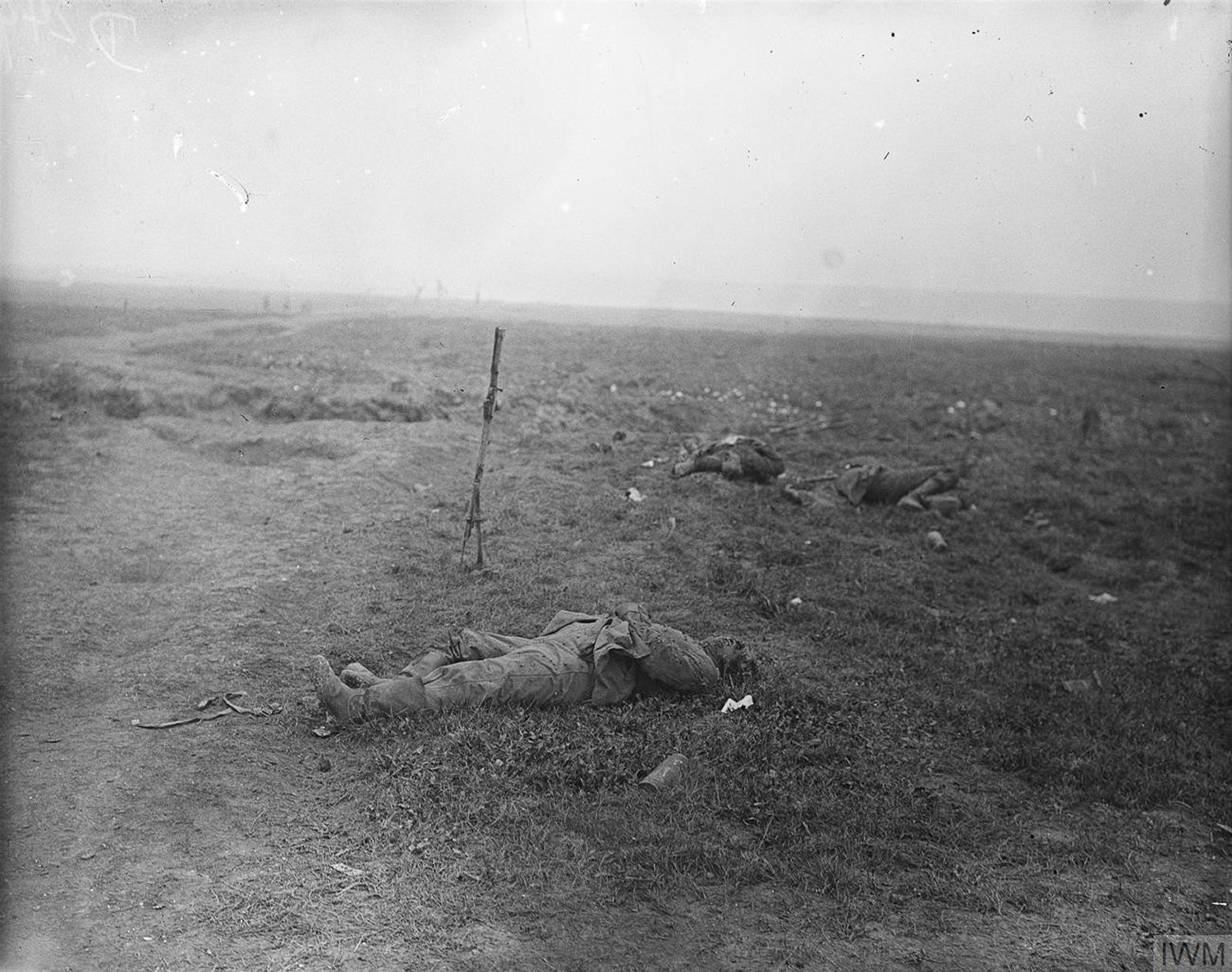
Harry was killed in action during the Battle of Guillemont.
Battles Of The Somme - Battle Of Guillemont - 03/09/1916
Location: Ginchy. German defensive success in the British victory. The village of Guillemont, in the south of the Somme battlefield and close to the boundary of the British Fourth Army and French Sixth Army, had been the objective of several attacks by the Fourth Army in late July and throughout August 1916.
On 3rd September the village, held by German Second Army, was again the subject of a large scale British attack. On the left of the attack, the objective of the 7th Division in XV Corps was the village of Ginchy and Ginchy Telegraph on the hill beyond it.
Advancing behind their creeping barrage and bombing parties with hand grenades, 22nd Infantry Brigade, 1st Royal Welsh Fusiliers, 20th Manchester Regiment and 2nd Royal Warwickshire Regiment, carried their way through the village and onto Telegraph.
The advance of 1st Royal Welsh Fusiliers in the north being held back, 20th Manchester Regiment in the centre, who had taken Ginchy, became exposed and were forced to pull back through it, as did 2nd Royal Irish Regiment who had moved up in support.
2nd Royal Warwickshire Regiment forming a defensive position to the south which they held until 5th September. 20th Infantry Brigade relieving 22nd Infantry Brigade, at 08.00 am on 4th September, 9th Devonshire Regiment was unable to reach Ginchy.
2nd Queen's (Royal West Surrey Regiment) of 91st Infantry Brigade on the left making progress towards Delville Wood in the afternoon of 5th September, at 05.30 am on 6th September, 2nd Gordon Highlanders made it to the western edge of Ginchy and then with support of 9th Devonshire Regiment at 14.00 pm, into the village. From where a strong German counter-attack that evening pushed them out again to the Guillemont road.
We use cookies on our website. Some of them are essential for the operation of the site, while others help us to improve this site and the user experience (tracking cookies). You can decide for yourself whether you want to allow cookies or not. Please note that if you reject them, you may not be able to use all the functionalities of the site.