
Miss Margaret Ellie Baker
Nurse, Voluntary Aid Detachment (VAD), Queen Alexandra's Imperial Military Nursing Service (QAIMNS)
Date of Birth: July - Sept 1887
Place of Birth: Thornham, Suffolk
Date of Death: 6th February, 1958 aged 70
Buried: Died at at Clifton Court, Clifton Bristol
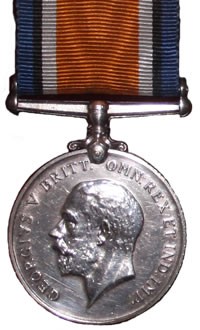
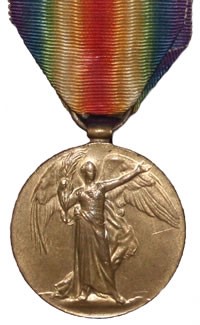
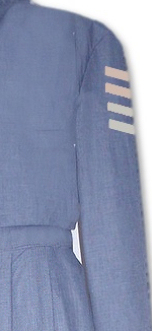
Awarded the British War medal, the Victory Medal, 3 VAD White Stripes and 1 Red
Miss Margaret Ellie Baker, age 28, of 2 Barn Park, Teignmouth, Devon.
Margaret was born in the 3rd quarter of 1887 in Thornham, Suffolk1.
In 1891 Margaret's family were living at Thornham Magna, Suffolk where her father was the Rector of the village. He was Reverend Charles Baker (born in Nuneham Courtenay, Oxfordshire. 1833-1910). Margaret's mother was Margaret Helena Baker née Ming (Born Liverpool, Lancashire. 1850-1931).2
Margaret had three siblings (Janeeta M. Baker, Montague Barrington Baker and George Barrington Baker), she also had three half-siblings from her father's second marriage. Montague and George survived the war.
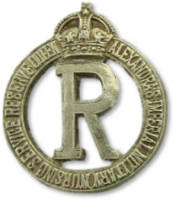 Q.A.I.M.N.S. collar badge
In 1911 Margaret was in the Manchester area training to be a Children's Nurse.3
Margaret was engaged as a VAD Nurse from the 24th July, 1916 to 16th April, 1919, during that time she worked as a Queen Alexandra's Imperial Military Nursing Service (Q.A.I.M.N.S.) Nurse on detachment to VAD in Military Hospitals in London, France and Devon.
Margaret became a Midwife on February 8th 1921 and is shown on the Midwives Roll of 1935 living at 2, Barnpark, Teignmouth.4
In the third quarter of 1924 Margaret married Major Thomas Rothwell Paget-Tomlinson (a mining engineer) in Kensington, London.5
Margaret died on the 6th February, 1958 aged 70 at Clifton Court, Clifton Bristol. 6
Queen Alexandra’s Imperial Military Nursing Service (Q.A.I.M.N.S.)
Margaret Ellie Baker was a Q.A.I.M.N.S. nurse
Before the 1850s, British Army medical services were organised by regiment and consisted of male nurses only.

In 1881 an Army Nursing Service was established to supplement the permanent staff of military hospitals at home and abroad.
It became Queen Alexandra’s Imperial Military Nursing Service (QAIMNS) in 1902.
At the outbreak of war in 1914 there were just under 300 nurses in the QAIMNS.
The nurses had each completed a full three year nurse training in an approved hospital and were of acceptable social standing.
As weapons developed there were horrific new injuries, including wounds caused by gas attacks, shrapnel, mines, mortars, grenades, tanks and flame throwers.
Army nurses served in Flanders, the Mediterranean, the Balkans, the Middle East and aboard hospital ships. Almost 200 army nurses died on active service.
The Carrel Dakin treatment of irrigation of wounds
Margaret's VAD card mentions that her duties included the Carrel Dakin treatment of irrigation of wounds.
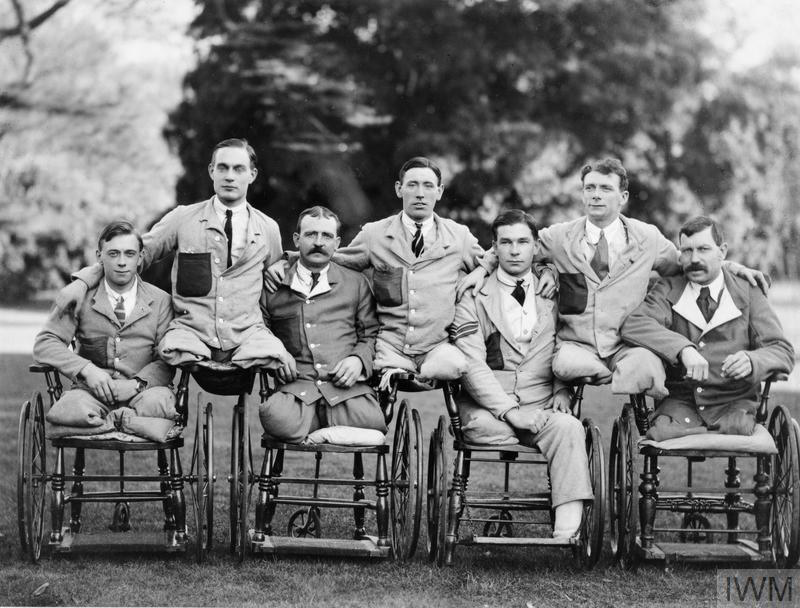 Servicemen with missing limbs in wheelchairs. The soldiers are wearing "Hospital Blues". © IWM (Q 108162)
During WW1 when soldiers were wounded by shell fragments, the fragments carried germs (from mud, rats, fecal matter and rotting bodies) into the tissue.
This resulted in infections and gas gangrene requiring amputation to stop the infection spreading further into the body.
Many thousands of men lost limbs.
The antibiotic penicillin was not discovered until 1928.
At the start of WW1 the common way to prevent infection was that the tissue around a wound was cut away and the wound sealed. Carbolic lotion was used to wash wound which was then wrapped in Carbolic soaked gauze.
Other wounds were ‘bipped’. ‘Bipp’ (bismuth iodoform paraffin paste) was smeared over severe wounds to prevent infection.
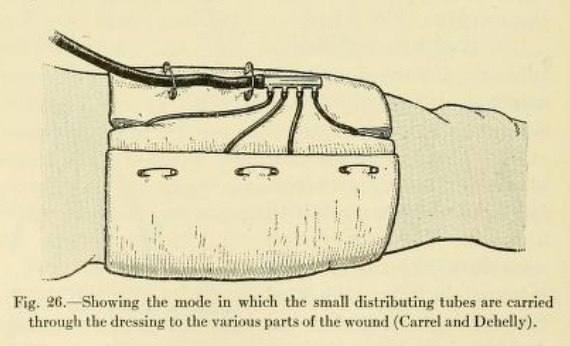 Carrel Dakin treatment. The treatment of war wounds. by Keen, William W. 1918 (Public Domain)
In 1916 a French surgeon, Dr. Alexis Carrel, was working in a temporary field hospital near the front.
He and an English chemist Henry D. Dakin developed a system that would irrigate wounds with a sterilizing solution, saving soldiers’ lives and limbs.
Dakin developed the solution, while Carrel developed a way to deliver it.
No. 26 General Hospital, Etaples France
Margaret served as a VAD Nurse at 26th General Hospital, Etaples, France from October 1916 - October 1917
"No. 26 General Hospital consisted of a main building of corrugated iron, divided into surgical four wards of 23 beds each, two operating theatres and an X-ray room, with kitchen, administrative block, laboratory, stores, dispensary, latrines and wash houses in similar construction.
 Air raid damage done at the St John's Ambulance Brigade Hospital at Etaples in France, May 1918. The group of Etaples hospitals were bombed at this time. © IWM (Q 290)
There were 32 wards of 27 beds in free-standing wooden huts 120ft long with tarred wooden roofs.
They were barrack huts and only 15 ft wide and could only accommodate only a single row of 21 beds, the extra 6 being placed lengthways across the opposite wall.
Eight of the wards were for skin conditions and one for mental cases for No. 26 General Hospital had been selected for the reception of skin diseases and the insane.
The latrines and bath houses were at some distance from the wards. There was no drainage system. solid material was incinerated and liquids, of whatever source, were run through soak pits driven 7-8ft into the chalk and boarded tro keep out the sand. These had to be constantly redug."
Extract from "Some account of the British hospitals in World War 1 at Etaples, in the orbit of Sir Almroth Wright by EW Meynell MD
Voluntary Aid Detachment (VAD) Records
Date of engagement with VAD: 24th July, 1916 to 16th April, 1919,
Rank: Nurse
Service rendered at:
Tooting Military Hospital, London.
26th General Hospital, Etaples, France. October 1916 - October 1917.
South Military General Hospital, Plymouth, Devon. January 1918 - April 1919
Honours awarded:
Three white stripes and one red.
Paid: £0 (worked full-time).
Voluntary Aid Detachment (VAD) Cards
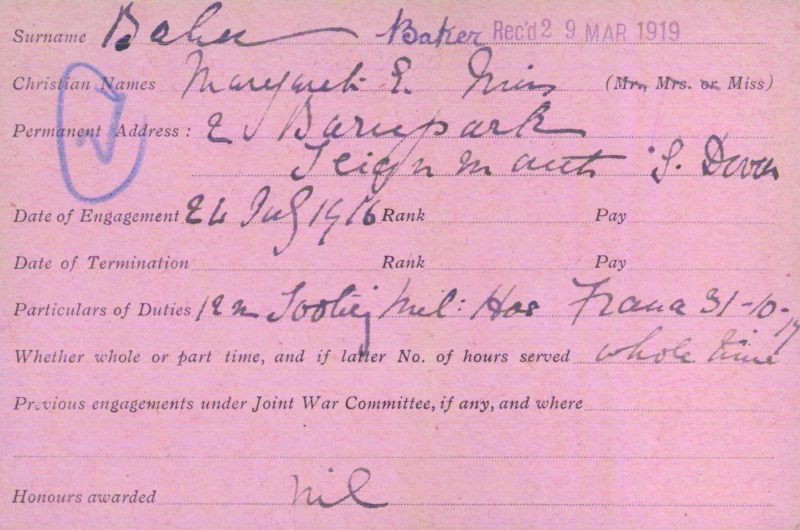 Voluntary Aid Detachment (VAD) Card. ©2018 British Red Cross (CC BY-NC 2.0 UK)
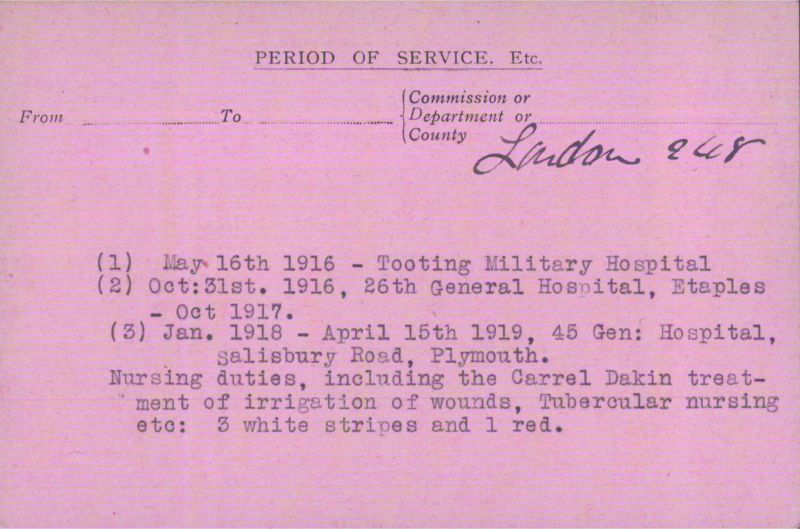 Voluntary Aid Detachment (VAD) Card. ©2018 British Red Cross (CC BY-NC 2.0 UK)
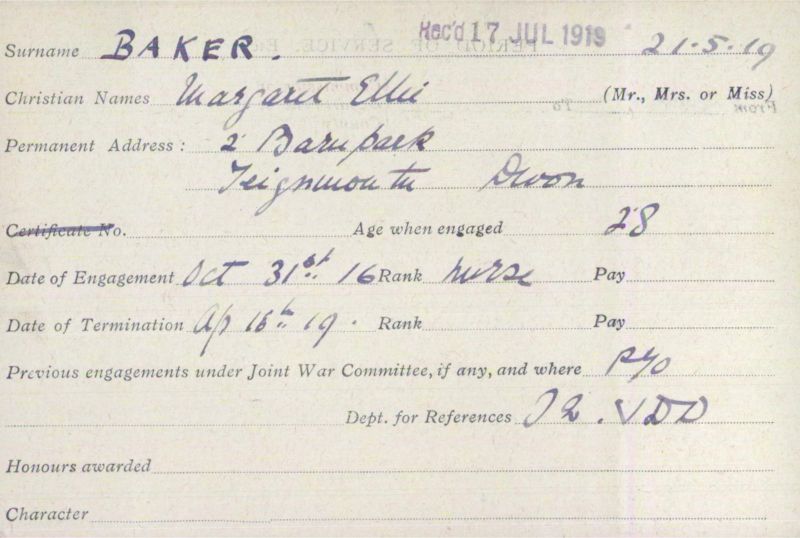 Voluntary Aid Detachment (VAD) Card. ©2018 British Red Cross (CC BY-NC 2.0 UK)
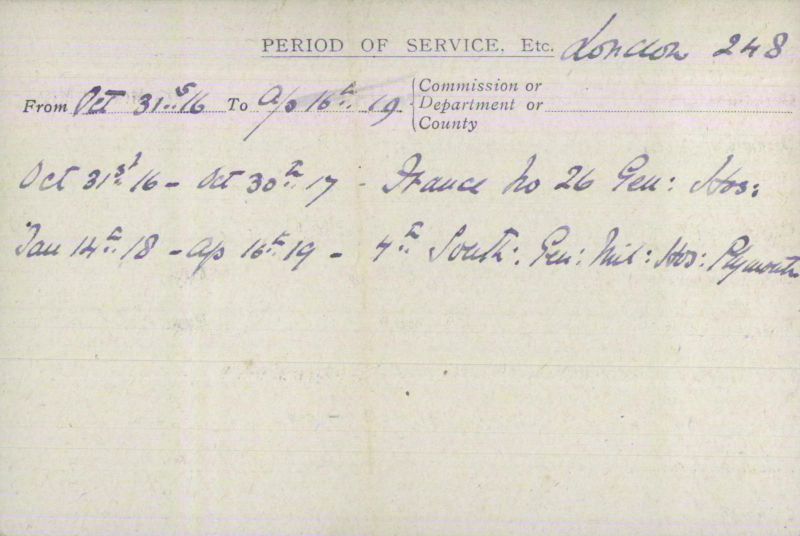 Voluntary Aid Detachment (VAD) Card. ©2018 British Red Cross (CC BY-NC 2.0 UK)
