
Mrs Florence Kate Gidley
Nurse, Voluntary Aid Detachment (VAD), British Red Cross
Date of Birth: Quarter 3, 1882
Place of Birth: Shute, Devon
Date of Death: 28 April 1951 aged 69
Buried: Died in Dawlish
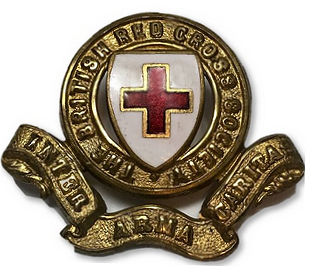 VAD hat badge
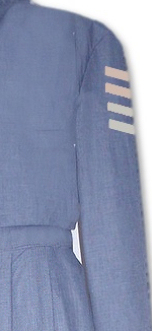
Awarded a Voluntary Aid Detachment Scarlet Stripe and an Eff Stripe
Mrs Florence Gidley (née Turl) was born in Shute in Devon 3rd quarter of 1882.1
Her father was was James Turl born in Colyton Devon (1836-1903) and her mother was Esther Elizabeth Turl (née Loveridge) born in Colyton, Devon (1835-1889).2
In 1881 the family were living at the Railway Cottages Shute where her father was working as a Railway Labourer.3
By 1901 Florence's father was a Foreman Platelayer still living in the same village with his family. Florence's mother at that time was a dressmaker running her own business which was employing her daughter Kate as a dressmaker and one of her grand-daughters as a milliner (hat-maker). Florence was elsewhere at that point.4
| Florence and her siblings' birth dates: | ||
| Mary E. H. L. Turl c. 1855 | Anne Hesther Turl c.1856 | John George Turl c. 1858 |
| Joseph Turl c. 1860 | Sarah Anne Turl c.1862 | Emma Turl c. 1864 |
| James Turl c.1866 | George Robert Turl c.1868 | Alice Charlotte Turl c.1869 |
| William Turl c. 1870 | Thomas Turl c. 1872 | Susan Turl 1874–1961 |
| Eva Esther Turl c. 1877 | Florence Kate Turl c. 1882 | |
In the first quarter of 1907 Florence married Theodore Ernest Gidley who was born in Christow, Devon c. 1878, their marriage was registered in Exeter. Theodore's family were Innkeeper's of the Palk Arms Inn in Christow.5
Florence and Theodore had a son, Maurice Theodore Gidley, he was born in Honiton in 1908 (Florence and Theodore both had other family members in Honiton).6
 Bessley's Street Directory Clipping
In 1911 the family were living at 4 Taddyforde Road, Exeter, Theodore was a Commercial Traveller in corn and wool (a trade which he had learnt from his father's half brother, Gustavus Gidley in Honiton).7
Florence was engaged with the Voluntary Aid Detachment (V.A.D) from 27th December, 1916 to 27th July, 1918. During this time she worked at the Netley Royal Victoria Military Hospital, Near Southampton, Hampshire. She gave her permanent address as 9 Second Avenue, Teignmouth when she joined.8
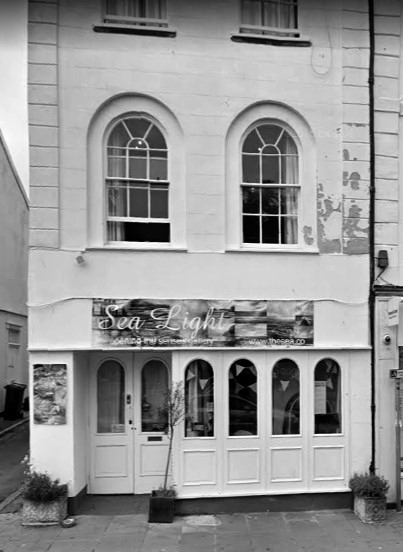 Florence's final home No. 28 The Strand, Dawlish. Now Sea Light Gallery, previously the Hole in the Wall Pub
Florence's husband, Private Theodore Ernest Gidley, served with the 7th, then 9th Battalions of the Devonshire Regiment. He was killed in action five weeks before the end of the war, during the final advance at Beaurevoir on the Somme, on 5th October 1918, he was age 41.9
Florence Kate Gidley of 28, The Strand Dawlish, Devon died on the 28 April 1951 aged 69, she left her effects to her only child, Maurice who had become a branch manager.10
If her brothers served in WW1, they survived the war.
Netley Royal Victoria Military Hospital, Hampshire.
During WW1 the regular Army Nursing Corps of the hospital were serving overseas so most of the staff at Netley were Army Nurse Reserves or Red Cross V.A.D. (Voluntary Aid Detachment) nurses.
Women, often as young as 18, many with no previous medical experience, found themselves nursing wounded men from the front.
Men who had lost arms, legs, faces, or who watched their brothers be blown into pieces.
A railway line allowed up to three ambulance trains a day to bring wounded direct from Southampton docks.
Netley had a military asylum, called D Block where men with the most severe psychosis were treated.
A half of all the men in WW1 suffering "shellshock" went to Netley.
This was the largest military hospital ever built, town-sized, covering 200 acres, with its own gasworks, school, stables, bakery, reservoir and prison.
Before WW1 the brick hospital was a quarter of a mile long, with over a thousand beds. In 1914, an extension was built to allow for 2,500 more beds by building a large Red Cross hospital of huts in fields at the rear of the main hospital.
In total some 50,000 patients were treated at Netley in WW1.
There is a serious prevalence of desertion to avoid duty in the trenches, especially in the 8th Brigade and I am sure that the only way to stop it is to carry out some death sentences.
General Sir Horace Smith-Dorrien, commander of the 2nd Army (reviewing a case in 1915)
Voluntary Aid Detachment (VAD) Records
Date of engagement with VAD: 27th December, 1916 to 27th July, 1918.
Rank: Nurse.
Service rendered at:
Netley Royal Victoria Military Hospital, Near Southampton, Hampshire.
Honours awarded:
Scarlet and an Eff Stripe.
Voluntary Aid Detachment (VAD) Cards
 Voluntary Aid Detachment (VAD) Card. ©2018 British Red Cross (CC BY-NC 2.0 UK)
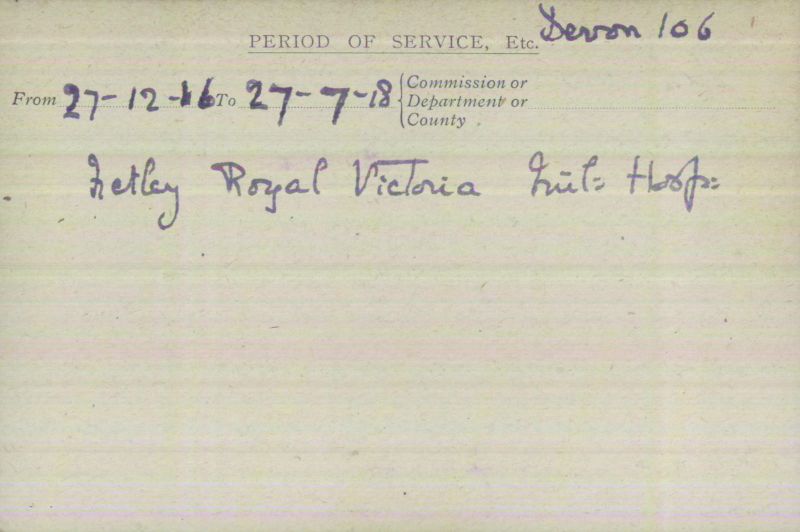 Voluntary Aid Detachment (VAD) Card. ©2018 British Red Cross (CC BY-NC 2.0 UK)
