British and New Zealand troops detraining at Poperinghe. © IWM (Q 3965)

Sapper John James Hugo Francis
332nd Road Construction Company, Royal Engineers.
Killed in Action
Date of Birth: 1880
Place of Birth: Dawlish, Devon
Date of Death: 23 October 1917 aged 37
Buried: Divisional Collecting Post Cemetery, Belgium. Remembered on Seafront Memorial, St Michael’s Church and St. James’ Church Memorial Window, Teignmouth, Devon
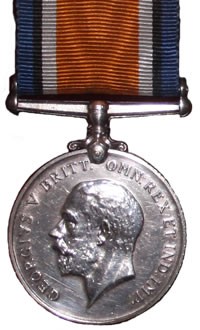
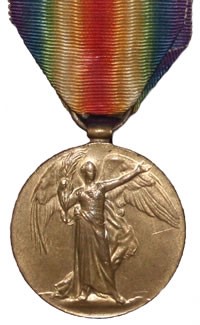
Awarded the British War Medal and the Victory Medal
Sapper John (Jack) James Hugo Francis age 37.
John was born at Dawlish in 1880 and baptised on 28 July, son of John Francis and Maria Campbell.
1891 he was living in Kingsteignton with his family. By 1901 he and his parents were at Salisbury Terrace, Teignmouth; he was working for Great Western Railway (GWR) in the Signal Department.
On 26 November 1905 John married Emma Louise Emmett at St. Michael’s Church and in 1911 he and Emma have three small sons. They were living at 5 Higher Brook Street and he was working as a blacksmith.
Serving as a territorial with Royal 1st Devon Yeomanry from 1909, Jack attested on 7 October 1914, service number 1792, for service in the war as a shoeing smith with 2nd Battalion. He was discharged from Yeomanry on 23 February 1916.
 Royal Engineers
Cap Badge
He re-attested on 9 January 1917 and served with 306th Road Construction Company, Royal Engineers as a Sapper , service number 228368. He became ill in 1917 and was sent back to England to No. 22 General Hospital on 26 February 1917.
On recovering Jack was transferred to 332nd Road Construction Company, and returned to France where he was killed in action on 23 October 1917.
Buried at Divisional Collecting Post Cemetery, Belgium. Remembered on Seafront Memorial, St Michael’s Church and St. James’ Church Memorial Window, Teignmouth, Devon.
John’s widow was awarded a pension of £1.17s.11d per week for herself and her five children.
“News of Sapper Jack Francis killed received by wife from Colonel of regiment, who said he was returning to the base when he was struck by a shell and killed instantly. Originally in 1st Devon Yeomanry and called up on mobilisation. Then joined R.E. , had just returned to France following home leave recovering from pneumonia when he was killed. Previously worked as a carter and a smith. His widow is the daughter of Mr Mrs C Emmett of French St. He leaves a widow and five children.”
Teignmouth Post
9 November 1917
Poperinge, West Flanders
The 332nd Road Construction Company of the Royal Engineers (RE) moved from Le Havre to Poperinghe in Belgium 19 June 1917.
In WW1 Poperinge, (known as Pops) was used by the British Army to enter the battlefields of the northern Ypres Salient.
It was an important base behind the front line with rail to take casualties down the line and transport of supplies in addition to being used for resting troops from the trenches.
The town was often targetted by German air artillery and between the 31 July and 10 November 1917 (The Third Battle of Ypres) it was bombed by German aircraft. John died on 23rd October, 1917.

