
Steward Frederick John Burton
SS Elsiston, Mercantile Marine
Died at sea
Date of Birth: 1857-59
Place of Birth: Teignmouth, Devon
Date of Death: 22nd October 1917
Buried: Buried at Suda Bay War Cemetery, Greece, XI. C. 16.
Remembered on the Merchant Navy memorial, Barry, Wales
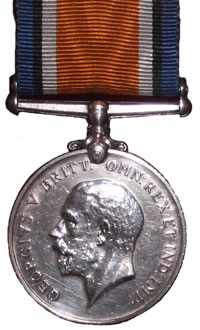
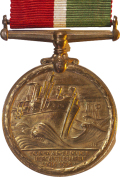
Awarded the Mercantile Marine Medal and the British War Medal
Frederick John Burton was born c. 1859 in Teignmouth Devon.
His father was Edward Isaac Burton, a mariner who had been born in Teignmouth (1828-1882), Edward was the Master of the Joshua Carroll in 1881.
Frederick's mother was Frances Burton née Heath who had also been born in Teignmouth (1832-1915).
Frederick married Fanny Lane in 1887 and their marriage was registered at Newton Abbot, Devon.
In 1901, the family are living at 39 Trinity Street, Cardiff. Frederick, senior, is listed as a 'Steward Seafaring'. Frederick has a daughter, Dorothy, aged 8, and a son Frederick Cecil Edward aged 2. Ann Lane, sister in law, is also staying with the family.
Frederick lost his son, Frederick Cecil Edward Burton on the 18th October 1915. He was serving in the 9th Battalion of the Devonshire Regiment when he was wounded at the Battle of Loos, he died of his wounds.
SS Elsiston
Frederick was the Steward of the merchant ship SS Elsiston, she was a defensively-armed steel-screw steamer.
 SS Elsiston (Identification uncorfirmed). Public Domain
 German submarine U 14. Bain News Service. November 17th 1914. Library of Congress. LC-B2- 3292-7. No known restrictions
The Elsiston was on passage from Malta for Suda Bay with military stores when she was torpedoed without warning and sunk by Austro-Hungarian submarine U14 on 19 October, 1917, approximately 150 miles East by South from Malta.
Of the 18 people aboard, one life was lost.
Frederick John Burton died on 22 October 1917.
The Merchant Navy
The British and German navies battled for control of the oceans, as those who controlled the shipping lanes could break the chain of essential supplies of food, equipment and re-inforcements to the enemy and win the war as a result.
Merchant shipping was protected by escorts of Royal Navy ships.
 First convoy at sea ART00190 © Australian War Memorial CC BY-NC
Britain heavily depended on these civilian cargo ships and the title 'Merchant Navy' was granted by King George V after the First World War to recognise the contribution made by merchant sailors.
Germany operated a policy of 'unrestricted submarine warfare', or sinking merchant vessels on sight. By the end of the First World War, more than 3,000 British flagged merchant and fishing vessels had been sunk and nearly 15,000 merchant seamen had died.
