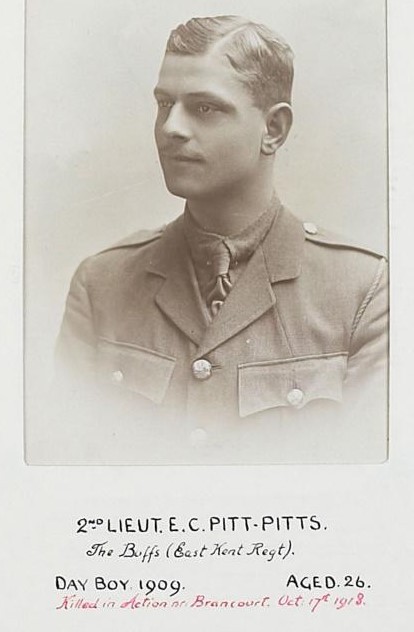
Second Lieutenant Edward Crewdson Pitt Pitts
4th Battalion, the Buffs (the East Kent Regiment)
Killed in Action
Date of Birth: Born 10 June 1892
Place of Birth: Beckenham, London
Date of Death: 17 October 1918 aged 26
Buried: Brancourt-Le-Grand Military Cemetery, France. Remembered on Seafront Memorial and St. Michael’s Church, Teignmouth, Devon
Awarded the British War Medal and the Victory Medal
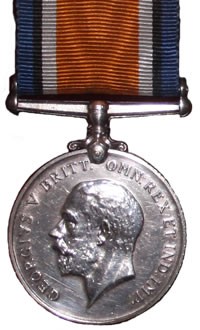
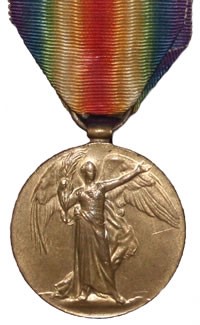
Second Lieutenant Edward Crewdson Pitt Pitts age 26.
Born 10 June 1892 at Beckenham and baptised on 17 September in Penge, Surrey, second son of William, a music publisher, and Mary Pitt-Pitts. In 1901 the family were living at Ticehurst, Sussex. From 1905-1909 he attended Tonbridge School. The 1911 census showed the family living in Tunbridge Wells, Edward was working as an accountant, his father was now an accountant.
In 1912 he was shown travelling from London on board SS Sicilia to Ceylon where he worked as accountant for a local company there.
He had served with the Ceylon rifles and eventually returned to UK in May 1917. On 1918 absent voter’s list he was registered at Lyncroft, Ferndale Road, Teignmouth, which was his parents’ home.
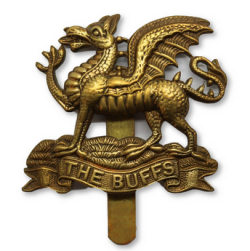 East Kent Regiment (The Buffs)
Cap Badge
On 28 June 1917 Edward enlisted in the Inns of Court Officers Training Corps as a private, service number 11569; he was gazetted 2nd Lieutenant to 4th Battalion, East Kent Regiment on 1 May 1918, and later sent with his fellow officers to France on 1 October 1918. Edward joined the East Kent Regiment (The Buffs) on 6 October and only eleven days later was struck by a large fragment of shell and instantaneously killed whilst leading his platoon in an attack near Brancourt on 17 October 1918.
Buried in Brancourt-Le-Grand Military Cemetery, France.Remembered on Seafront Memorial and St. Michael’s Church, Teignmouth.
Grave Inscription reads: In thy presence is fullness of joy.
His younger brother Walter James Pitt Pitts had died in France only two months previously on the 9th August 1918 aged 19.
“2ND LIEUT. EDWARD CREWDSON PITT-PITTS, 4TH BATTN.THE BUFFS (EAST KENT REGT.)(T.F.).KILLED IN ACTION NEAR BRANCOURT, OCTOBER 17TH, 1918.AGED 26.
At the School 1905—9 (Day Boy). 2nd Lieut. E. C. Pitt-Pitts was the second son of Mr. and Mrs. William Edward Pitt-Pitts, formerly of Tunbridge Wells, and now of Lyncroft, Teignmouth. South Devon. His younger brother, Lieut. Walter John Pitt-Pitts, R.A.F. (D.B. 1913—15), was killed while on a photographic reconnaissance near Bapaume, on August 9th, 1918.
Entering the School in September, 1905, from Rose Hill School, Tunbridge Wells, together with his elder brother William Arthur, who left in 1907 and proceeded to Emmanuel College, Cambridge, and is now Chaplain to the Bishop of Uganda, E. C. Pitt-Pitts left from the Modem Fifth in July, 1909, and after two years with a firm of Chartered Accountants went out to a Ceylon tea plantation in 1912, and was with the Anglo-Ceylon and General Estates Co., Ltd. He had served in the Ceylon Rifles till he came home in May, 1917, to obtain a commission.
Joining the Inns of Court O.T.C. on June 28th, he was gazetted to the 4th Battn. of The Buffs (East Kent Regt.) (T.F.), May 1st, 1918, and joined his Battalion at Tonbridge. The Buffs had lost heavily in September, and he was sent out to the front with a number of other officers from the 4th Battalion on October 1st, 1918.
Being posted to the 1st Battalion, he joined them on the 6th, and only eleven days later, on October 17th, was struck by a large fragment of shell and instantaneously killed whilst leading his Platoon in an attack near Brancourt, in the course of the advance subsequent to the Battle of Cambrai, in the Battles of the Hindenburg Line.
A brother subaltern wrote :— " Although he was only a few days with the Battalion he was very popular, not only amongst us officers but with the men of his platoon."
His Company Commander wrote:— " He had only just been posted to this Company, but by his persistent cheerfulness under all circumstances had endeared himself to us all. . . . He is the third officer we have lost in the Company in nine days. We naturally feel their loss very much, as they were all jolly good fellows and good soldiers."”
Obituary written by Tonbridge School
The Hundred Days Offensive
This was an allied offensive 8 August to 11 November 1918 which ended the First World War, but at a huge cost.
Allied casualties between August and November 1918 were around 700,000. German casualties were slightly higher at around 760,000.
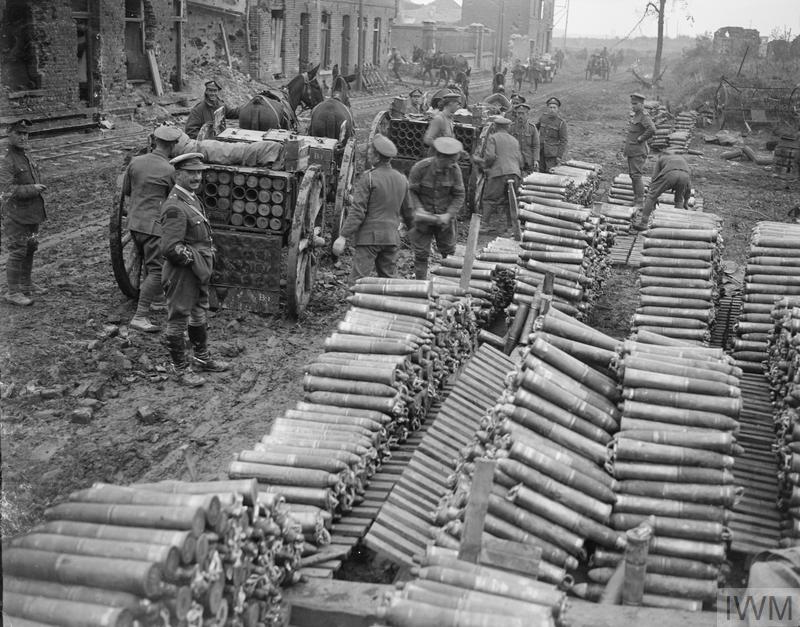 A roadside dump of 18-pounder shells (Range 3 miles) 15 October 1918. © IWM (Q 9609)
