
Private Charles Carter
8th Battalion, the Devonshire Regiment.
17554
Killed in Action
Date of Birth: 1882
Place of Birth: Exeter, Devon
Date of Death: Died 14 July 1916 aged 21
Buried: Recorded on the Thiepval memorial (having no known grave)
Awarded the 1914-15 Star, The British War Medal and the Victory Medal
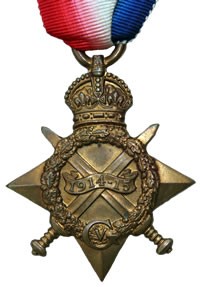
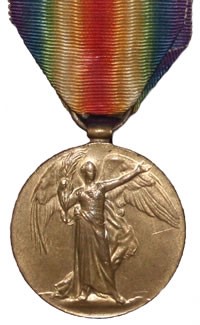
Private Charles Carter. Born in 1882, possibly the son of Frederick and Mary Ann Carter of Spicer's Court, Exeter. Baptised in All Hallows-on-the Wall, Exeter on 13 October 1882.
Shown on 1891 census with parents and siblings at St. Mary Steps.
Charles Carter married Maud Stitson in 1913 registered at Newton Abbot. Maud was previously shown on 1911 census living with her family at West Cliff, Teignmouth. She was also shown as Maud Carter living on her own on the electoral roll for Teignmouth in 1920.
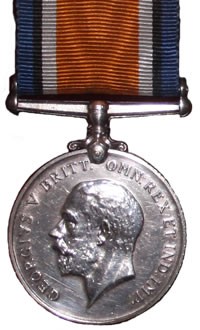
His military record states he was born in Exeter and that he enlisted with 8th Battalion, Devonshire Regiment, service no. 17554, this number indicates that he joined in April/May 1915.
His Medal Rolls card shows that he entered the theatre of war in France on 3 December 1915.
The Soldiers Died in the Great War, 1914-1919 list, published in 1921 by His Majesty's Stationery Office shows Charles as residing in Teignmouth.
He was posted as missing in Teignmouth Post edition of 8 August 1916. His death was recorded as killed in action on 14 July 1916. Remembered on Thiepval Memorial; and Seafront Memorial, Teignmouth.
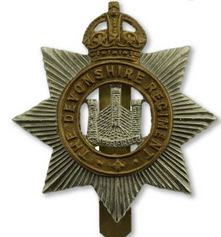 Devonshire Regiment
cap badge
The Battle of Bazentin Ridge 14 -17 July 1916.
This was part of the 1916 Somme Offensive.
On the 14th of July 1916 the attack began at dawn with a short, intense artillery bombardment of the German trenches.
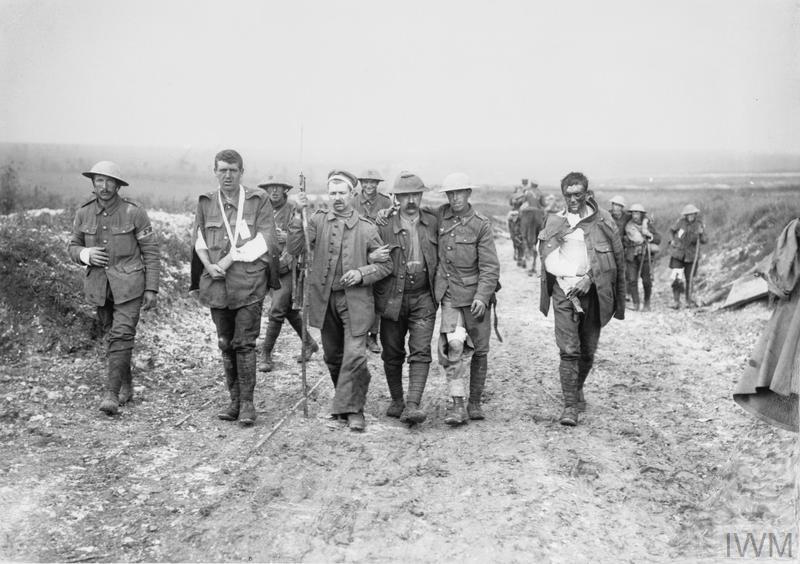 Battle of Bazentin Ridge. Five British and German walking wounded, injured in their arms and legs, on the way to a dressing station near Bernafay Wood, July 1916. B© IWM (Q 800)
Bazentin-le-Grand and Bazentin-le-Petit were captured within hours.
The 8th Devons were given the objective of ‘the Snout’, (the German position in Bazentin Wood), they attacked at night and were successful.
Charles went missing that day and was never found.
In the First World War six million men went missing and were never found, their bodies were lost in the mud. Sometimes bodies would be found as new trenches were dug.
Charles Carter of Teignmouth was lost on the 14th July 1916.
